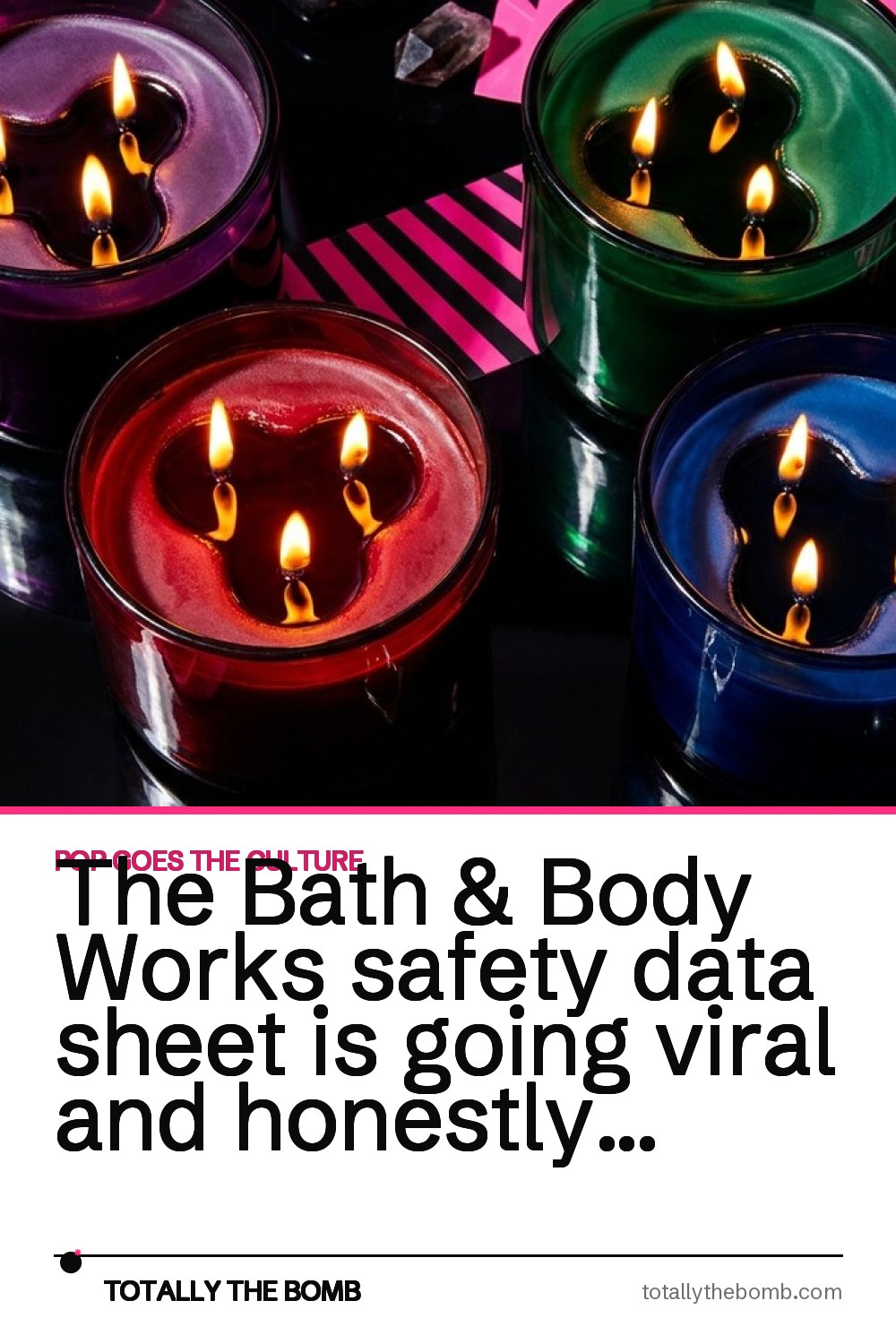
Okay, so I am a person who has, at various points in my life, owned approximately forty-seven Bath & Body Works candles at once. I don’t know if that makes me a collector or a problem, but here we are.
So when a Bath & Body Works safety data sheet started making the rounds online — people screenshotting it, quote-tweeting it, losing their minds over ingredient names that sound like they belong in a chemistry final — I paid attention. I get it. The list looks alarming at first glance.
But here’s what I actually think is happening, and why the viral panic is maybe missing a few things.
What even is a safety data sheet?
A safety data sheet — SDS for short — is a document required by OSHA for any product used in a workplace. It lists chemical components, hazard classifications, and safe handling procedures. It is written for people working with large quantities of a substance in an industrial or retail setting, not for someone who lit a Mahogany Teakwood candle because their apartment smelled like sadness.
Think about it this way: water has an SDS. So does table salt. The format is designed to cover worst-case exposure scenarios at scale, which is a very different thing from burning one candle for two hours on a Sunday.
Why is the Bath & Body Works one going viral right now?
The document surfaced — as these things do — on social media, where someone posted it without a ton of context and people understandably freaked out at words like “fragrance compounds” and “irritant” in the hazard section. Which, fair. Those words do not spark joy.
The thing is, “fragrance” is a catch-all term that can cover hundreds of different compounds, and the FDA doesn’t require brands to disclose every single one. That’s a real and legitimate criticism of the beauty and personal care industry — and the Environmental Working Group has been banging that drum for years. That part of the conversation? Totally worth having.
But a viral screenshot without context tends to skip straight to “this candle is going to kill you,” and that’s where I start pumping the brakes.
Should you actually be worried about your candles?
Probably not in the way the viral posts are suggesting. The levels of chemical exposure that trigger those SDS hazard classifications are typically way, way higher than what you’d encounter burning a candle in a ventilated room. That’s not me being a shill — that’s just how exposure science works.
That said, if you burn candles constantly in a small, unventilated space, that’s worth thinking about regardless of the brand. Good airflow is good airflow. Crack a window. This is advice that applies to literally every candle on the market, not just the ones that smell like a flannel shirt dipped in vanilla.
And look — if you want to go the soy or beeswax route, or switch to a diffuser, that’s a completely valid choice. Nobody’s making you buy the three-wick. But what do I know?

Is Bath & Body Works actually hiding something?
I don’t think “hiding” is quite the right word, but I do think the fragrance industry’s ingredient disclosure practices leave a lot to be desired. The loophole that lets brands list “fragrance” as a single ingredient instead of breaking out every component is a real problem — and it predates Bath & Body Works by several decades. It’s an industry-wide issue baked into federal law, and fixing it would require actual regulatory change, not just one brand suddenly deciding to be more transparent.
In the meantime, if you want to dig into what’s in your favorite products, the EWG’s Skin Deep database is genuinely useful. It’s not perfect, but it’s a real resource that looks at actual formulations — not just vibes and viralSDS screenshots.
So what should you actually do with this information?
Maybe nothing. Maybe something. That’s genuinely up to you.
If you’ve been burning these candles for years and feel great, you’re probably fine. If this sent you down a rabbit hole and now you’re reconsidering your entire bath and body situation, that’s also a legitimate response to new information — even if the original source was a screenshot with no context.
What I’d push back on is the idea that the SDS itself is a smoking gun. It’s a workplace safety document doing exactly what it’s supposed to do. The real conversation — the one worth having — is about fragrance disclosure laws and why “fragrance” gets to be a mystery box ingredient in the first place. That’s been a story worth covering for a long time, and this viral moment might actually be a useful entry point for people who’ve never thought about it.
I wrote a little about ingredient transparency in my thoughts on clean beauty claims a while back if you want to go deeper on that whole thing.
Here’s where I land: the Bath & Body Works SDS isn’t evidence of a conspiracy. It’s a routine document that looks scarier than it is when you strip it of context and post it next to a horror-movie font.
But the underlying concern — that the fragrance industry doesn’t have to tell you everything that’s in your products — is real and worth caring about. Those are two separate things, and they kind of got mashed together in this particular viral moment.
Burn your candle if you want to. Open a window. And maybe go look up your favorite products on EWG’s Skin Deep while the wick is doing its thing.
Frequently asked questions
What is the Bath & Body Works safety data sheet that’s going viral?
Are Bath & Body Works candles actually dangerous?
Why does the Bath & Body Works SDS list so many chemical warnings?
What is the fragrance ingredient loophole in beauty products?
How can I check if my Bath & Body Works products are safe?
Should I stop buying Bath & Body Works products because of this?
Is the Bath & Body Works safety data sheet real?