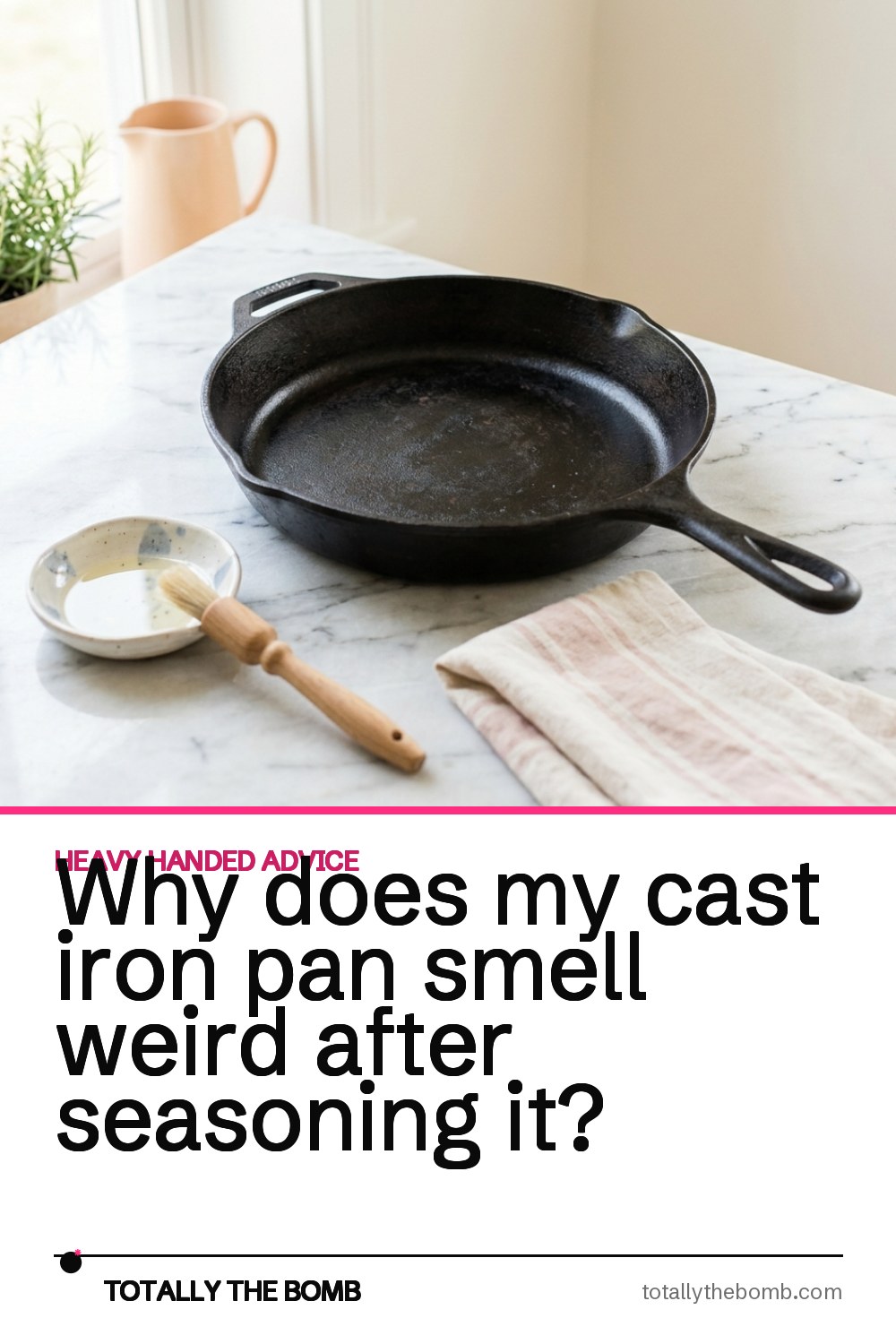
Okay, so you seasoned your cast iron pan. You followed the instructions, you rubbed in the oil, you stuck it in the oven, and now your kitchen smells like something between a fast food fryer and a chemistry lab. Congratulations — you’ve entered the cast iron panic spiral.
Here’s the thing: that smell doesn’t mean you ruined it. It doesn’t mean it’s toxic. It means something went slightly sideways in the process, and it’s almost always a one-variable fix.
I’ve seen this question get answered on forums by people who write things like “she needs to breathe” about their skillet, and I just — I can’t. You deserve a straight answer that doesn’t require you to treat your cookware like a houseplant with feelings.
What causes the weird smell after seasoning cast iron?
Too much oil is the number one culprit. When you apply more than a paper-thin layer and then bake it, the oil doesn’t fully polymerize — it partially burns, partially goes rancid, and you end up with a sticky, smelly pan that smells vaguely like old french fries left in a gym bag.
The second cause is just normal smoke from the oil burning off at high heat. That one’s fine. Annoying, but fine.

Why does it smell rancid even after it cools down?
Rancid oil smell after cooling means the oil pooled somewhere and didn’t fully bake through. It essentially sat on the surface and oxidized in the worst way — not the good polymerization you want, but the gross “this oil is turning” kind.
This happens most often when people apply oil generously because it feels like more is better. It is not. Cast iron seasoning is one of the rare situations in cooking where less is genuinely, measurably, scientifically more.
Does the type of oil matter?
Yes, actually — and this is where a lot of advice online goes sideways. Oils with a high smoke point and high polyunsaturated fat content are your best bet. Flaxseed oil became a cult favorite for years because of this, though some food scientists have pushed back on it as being prone to flaking.
For everyday seasoning, plain Crisco shortening or a neutral vegetable oil does the job. Olive oil smells more because it has a lower smoke point — it burns before it fully polymerizes, which just means more smoke and more weird smell, not a better result.
Avoid anything with added flavors. Butter. Bacon grease for initial seasoning. Coconut oil if it’s virgin and fragrant. You’re cooking it at 450-500°F — any flavor compound in that oil is going to announce itself.
How do I fix a cast iron pan that already smells bad?
Wash it. I know, I know — the cast iron community treats soap like it’s going to summon a demon, but a tiny bit of dish soap and a good scrub isn’t going to strip well-established seasoning. It’s going to remove the layer of rancid oil sitting on top of it.
Scrub it out, rinse it thoroughly, dry it completely on the stovetop over low heat, then re-season with the thinnest possible coat of oil you can manage. Seriously — wipe the oil on, then wipe most of it back off. It should look almost dry. Then bake it upside down at 450-500°F for an hour.
The Lodge Cast Iron care guide is actually solid on this — they make the pans, they know what breaks them and what doesn’t.

Is the smell coming from the pan actually dangerous?
Almost certainly not. Smoke from high-heat oil seasoning is irritating but not toxic in normal home quantities. Rancid oil smells awful but it’s not going to poison you if it’s just on the surface of a pan you’re about to re-season.
The one thing worth knowing: if you ever smell something truly chemical — sharp, acrid, plastic-adjacent — check whether any coating was on the pan when you bought it. Some pans come with a protective coating that needs to be stripped before the first seasoning. That smell is different from oil-gone-wrong and worth taking seriously.
Why does my cast iron smell fine in the oven but weird when I start cooking with it?
This one trips people up. The seasoning smells okay when it comes out, but the second you heat it on the stove, there it is again. That usually means the seasoning isn’t fully cured yet — you might need one or two more rounds of seasoning before it stabilizes.
Also worth knowing: a new or recently re-seasoned cast iron pan is going to smell more than a well-used one. Seasoning builds up over time. The more you cook with it — especially fatty things like bacon, a good sear on a steak, or a pan of cornbread — the better and more neutral it gets.
Does oven temperature actually change the smell?
Yeah, it does. Seasoning at too low a temperature means the oil sits there warming without fully polymerizing, which is exactly the condition that creates rancid-adjacent smells. You want the oven at or above the smoke point of your oil — for most neutral oils, that’s around 400-450°F, so setting it to 450-500°F gives you a cushion.
The upside-down trick — placing the pan rack-side down so excess oil drips off rather than pooling — genuinely helps here. I’d seen it in my deep dive into cast iron myths and brushed it off as overkill. It’s not overkill. It’s just physics.
How many times do I need to season it before the smell goes away?
For a brand new pan, usually two to three rounds is enough to get a stable, neutral base. For a pan you’re rescuing from rancid-oil purgatory, plan on scrubbing it back to basics and doing three rounds minimum.
The smell fades as the seasoning builds and as you actually cook with it. Cast iron is one of those things that gets better the more you use it, not the more you fuss over it. The people who obsessively re-season their pan every week sometimes end up with worse results than the person who just cooks eggs in it every morning and wipes it out.
If you’re also trying to figure out what to actually cook in it once it stops smelling weird, I started keeping a running list of weeknight recipes that work really well in cast iron — because nothing seasons a pan faster than actual food.
The cast iron smell thing is genuinely not a big deal once you know what caused it. Too much oil or the wrong oil — those are the only two real villains here.
Scrub it, re-season thin, bake it hot. That’s the whole answer. No need to name it or describe its feelings about the process.
Give it a few uses and it’ll calm down. Cast iron is durable as hell — it survived whatever neglect it experienced before it got to you, and it’ll survive you figuring out the seasoning too.
Frequently asked questions
Why does my cast iron pan smell bad after I season it?
Is it safe to use a cast iron pan that smells weird after seasoning?
What oil should I use to season cast iron without a bad smell?
How do I get rid of the rancid smell on my cast iron pan?
Why does my cast iron smell fine in the oven but bad when I cook with it?
Does the oven temperature matter when seasoning cast iron?
How many times do I need to season cast iron before the smell goes away?