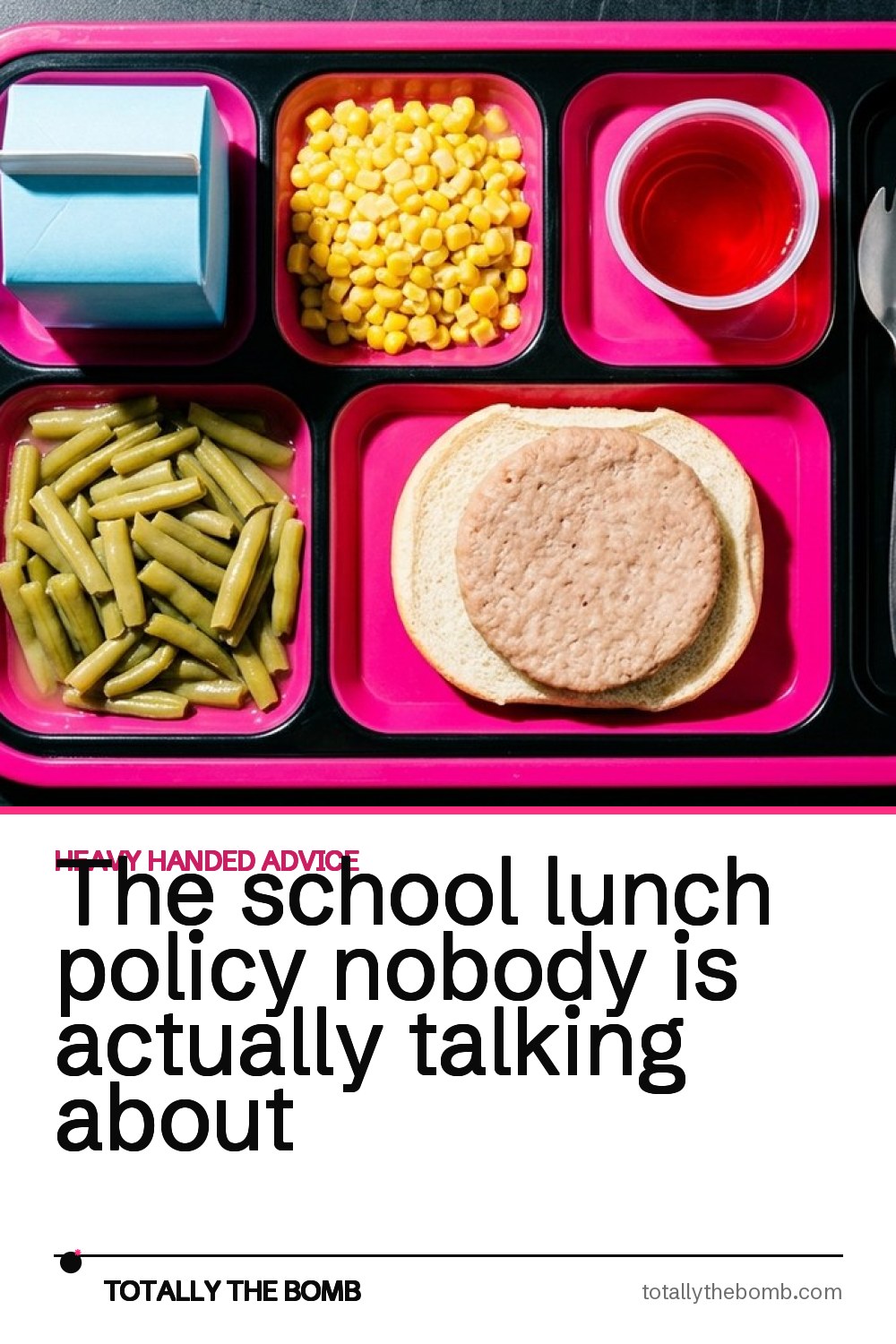
There is a tray of food sitting in front of a kid right now — soggy green beans, a hockey-puck burger on a white bun, chocolate milk with more sugar than a candy bar — and it is completely legal. Totally sanctioned. Approved by a federal policy that hasn’t had a serious overhaul in decades.
And nobody is losing their mind about it. That’s the part I can’t get past.
We talk about what kids eat at home constantly. We debate school vending machines, birthday cupcakes, Halloween candy. But the actual daily school lunch? The one kids are eating five days a week, nine months a year? Somehow that’s just… fine.
Why is nobody talking about school lunch policy right now?
The silence is the weirdest part. School lunches fall under the National School Lunch Program, which is run by the USDA and has been operating since 1946. Nineteen. Forty. Six. The last significant nutritional update came with the Healthy, Hunger-Free Kids Act of 2010 — and even those changes got quietly rolled back under the Trump administration in 2018, loosening sodium limits and whole-grain requirements that schools had complained were too hard to meet.
So we’re basically operating on vibes and political compromise when it comes to feeding millions of kids lunch every single day.
What do the current standards actually require?
On paper, USDA school lunch standards require fruits, vegetables, grains, protein, and milk at every meal. Sounds reasonable. In practice, the way those categories get fulfilled is… creative.
Flavored milk counts as dairy. Pizza counts as a grain AND a protein if you squint at it right. Corn — which is basically a starch — routinely counts as a vegetable. The bar is technically being cleared, it’s just that the bar is on the ground.
The USDA’s own data shows that the program feeds around 30 million kids a day. Thirty million kids. Getting lunches that may or may not be giving them what they actually need to sit in a classroom and think for five more hours.
Is cheap food the real problem, or is it the policy?
Both, honestly. Schools get reimbursed between $4 and $5 per meal from the federal government for kids who qualify for free lunch. That’s the budget. You try feeding a growing person something genuinely nourishing for $4 and see how far you get when you’re also paying labor, utilities, and equipment.
The funding model hasn’t kept pace with actual food costs, so cafeteria managers do what anyone would do — they buy processed, shelf-stable, high-calorie food that stretches the budget. It’s not laziness. It’s math.
But the policy could fix the math. It just doesn’t.
The “alternative” lunch situation is its own disaster
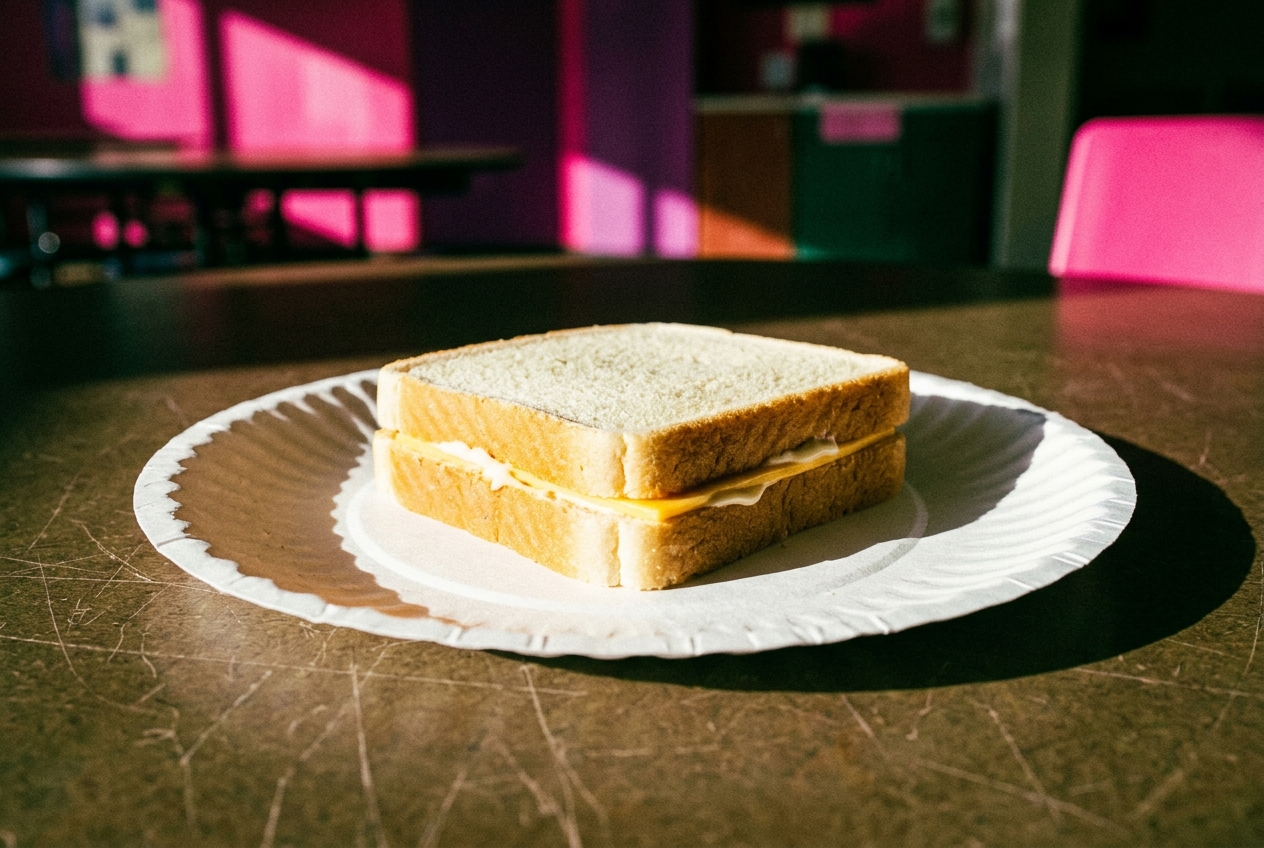
Here’s a specific thing that makes me genuinely annoyed: the alternate meal rule. If a kid can’t pay for lunch — or their account is in debt — many schools are required to provide an “alternate meal.” Which in most districts means a cold cheese sandwich and a carton of milk.
In front of everyone.
Some states have passed laws against lunch shaming specifically, but it’s patchwork. There’s no federal ban on it. So depending on where a kid grows up, they might be handed a humiliation sandwich in the cafeteria line while everyone watches.
In my post about kids and the stuff we don’t say out loud enough, I talked about how kids pick up on everything. You really think they don’t know what that cheese sandwich means?
What’s the strongest argument against overhauling school lunch standards?
Fairness demands I actually say this: the counter-argument isn’t nothing. Schools — especially underfunded rural and urban districts — are already stretched impossibly thin. Mandating higher-quality ingredients without meaningfully increasing per-meal reimbursement rates is basically an unfunded mandate with good PR.
The 2010 reforms failed partly because schools couldn’t afford to make them work. Kids threw away more food. Participation dropped. Cafeterias lost money. The intentions were real but the implementation was a mess.
I still think the answer is “fix the funding AND the standards together” rather than “leave it alone” — but ignoring the logistical reality doesn’t help anyone.
What would actually make a difference here?
A few things, and none of them are revolutionary — which is kind of the point. Increasing per-meal reimbursement rates to reflect actual 2024 food costs would be a start. Closing the loopholes that let pizza count as two food groups would be another.
Universal free school meals — which some states have already done on their own — removes the lunch debt and alternate meal problem entirely. California, Maine, Colorado, and a handful of others have already figured this out. The sky hasn’t fallen.
But what do I know? I’m just someone who ate a lot of cafeteria food and remembers exactly none of it being something I’d describe as nourishing.
Why does this keep getting buried under louder conversations?
School lunches don’t trend. They don’t make good TV. There’s no dramatic villain — just decades of underfunding, bureaucratic inertia, and a weird cultural blind spot where we care intensely about what kids eat at birthday parties but shrug at what they eat every Tuesday at noon.
In my older rant about the things schools get quietly wrong, I made the point that the loudest school debates are usually about the most visible stuff. Lunch happens behind a set of double doors that most adults haven’t walked through since they were twelve.
Maybe that’s the whole problem. Out of sight, out of policy.
Thirty million kids. Every school day. Eating whatever the budget and the policy decided they deserve.
That number should make us uncomfortable enough to actually do something — or at minimum, to stop pretending the conversation is happening when it isn’t. We’re not even at the “arguing about solutions” stage. We’re still at the “acknowledging there’s a problem” stage, and somehow that keeps getting skipped.
But what do I know. I just think kids deserve a lunch that isn’t an afterthought.
Frequently asked questions
What are the current USDA school lunch requirements?
When were school lunch standards last updated?
How much does the federal government reimburse schools per lunch?
What is lunch shaming at school?
Which states have universal free school meals?
Why hasn’t the school lunch program been reformed?
Is chocolate milk allowed in school lunches?