Okay, so I am not going to pretend I’ve been a lifelong soccer person. But every four years the World Cup shows up and suddenly I care deeply about countries I couldn’t find on a map two weeks earlier.
And every single time, I end up confused about the same thing. What happens when nobody wins? Does everyone just go home? Is there a coin flip? Is someone going to cry on international television?
The answer depends entirely on where you are in the tournament — and once you hit the knockout rounds, it becomes one of the most genuinely stressful things in all of sports. Here’s the whole thing, broken down.
What does a tie mean in the World Cup group stage?
A draw in the group stage is completely normal — both teams collect one point and life goes on. Each team plays three group matches, racking up points along the way — three for a win, one for a draw, zero for a loss. The top two from each group advance to the knockout rounds.
So a draw isn’t a disaster. For a smaller team playing a powerhouse, walking away with a point is sometimes exactly the right result. You survived. You live to play another day.
The complicated part is when multiple teams finish level on points after all three games. Then FIFA works through a tiebreaker formula — goal difference first, then total goals scored, then head-to-head results, then a few more layers of math that could honestly be its own post. And at the very bottom of that list, if everything is somehow still deadlocked — a coin flip. A literal coin flip. For the World Cup.
What happens when it’s tied in a knockout round?
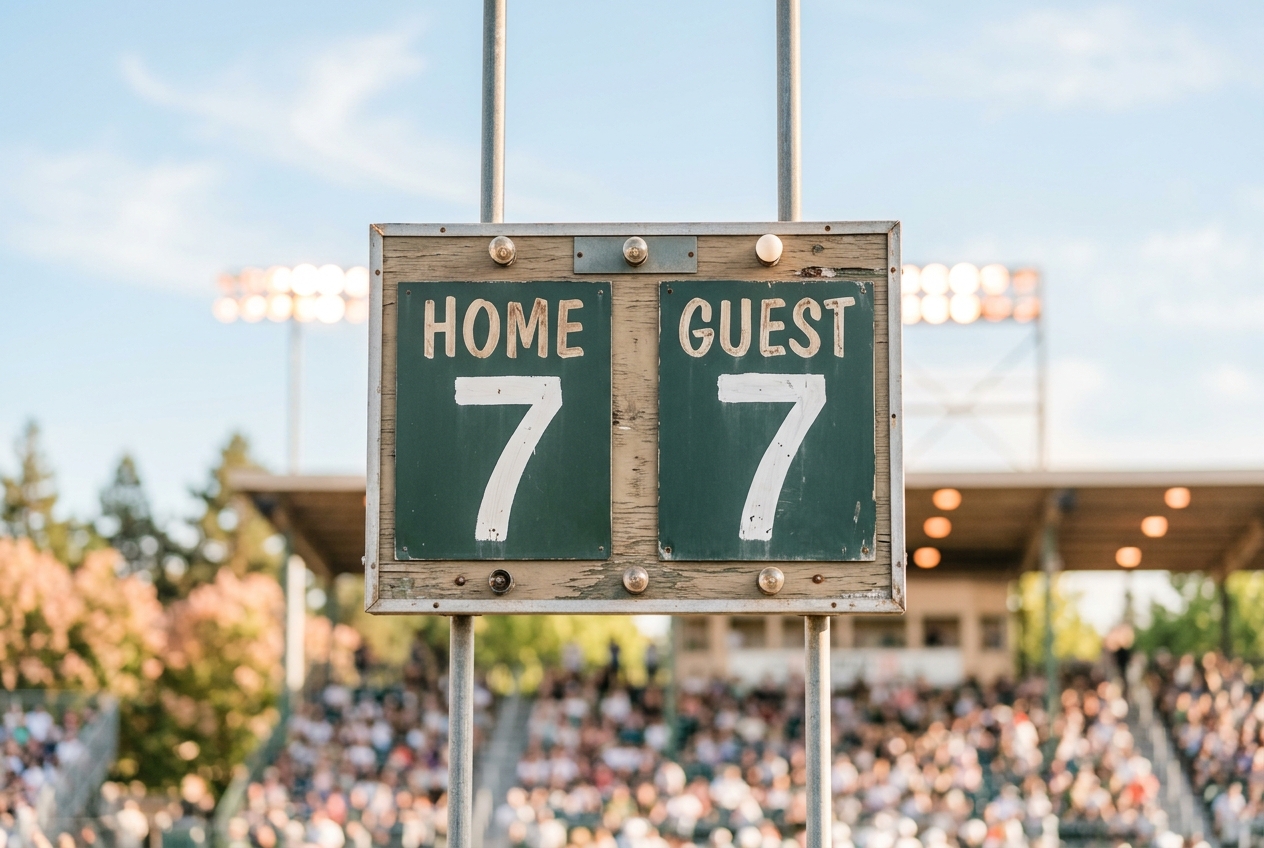
This is where it gets genuinely unhinged. Past the group stage, a draw is not allowed to exist. Someone has to advance and someone has to go home, and the tournament will do whatever it takes to make that happen.
If the score is level after 90 minutes, the game goes to extra time — two 15-minute halves, 30 minutes total. The old golden goal rule — where the first team to score in extra time wins instantly — was scrapped by FIFA back in 2004. So now you play all 30 minutes regardless, even if someone scores in the first minute. Both teams always get the full extra time.
Which means 30 more minutes of stress-eating whatever is in reach and pretending I’m fine.
What if it’s still tied after extra time?
Penalty shootout. That’s it. That’s the whole answer.
Each team picks five players. They alternate kicks from the penalty spot. Whoever scores more out of five wins. If it’s still level after five kicks each, it goes to sudden death — one kick at a time, back and forth, until someone misses and someone doesn’t.
It is genuinely one of the most unwatchable things I’ve ever watched. I say unwatchable and I mean I literally cannot look away. It makes no sense as a human experience and yet here we all are.
Why do penalty shootouts feel so unfair?
Because you play 120 minutes of exhausting, tactical football — and then it comes down to one person, alone, twelve yards from goal, with the weight of their entire country on their shoulders. That feels wrong. It feels like it should be against the rules.
The counterargument — and it’s a fair one — is that both teams face the exact same pressure. The shootout rewards nerve, preparation, and goalkeeper instinct just as much as luck. Sports psychology research has found that teams who practice penalties more systematically tend to perform better, which means it isn’t as purely random as it feels in the moment.
But try telling that to England fans. They’ve been through things no fanbase should have to go through that many times in a row.
Which World Cup matches have been decided this way?
Some of them will live forever. Germany and Argentina in the 1990 final. France and Italy in 2006 — which technically went to penalties after Zinedine Zidane’s headbutt got him sent off in extra time, which is its own tier of dramatic that I don’t have enough words for.
England has lost so many knockout-round shootouts that it stopped being surprising and started being mythology. They’ve built an entire national emotional identity around it.
The 2022 World Cup in Qatar had knockout rounds that kept delivering — including a final between France and Argentina that was 2-2 after 90 minutes, 3-3 after extra time, and eventually settled on penalties. Argentina won. If you haven’t watched it and you have two-plus hours and some emotional stability to spare — watch it. It makes sense because that match is basically a perfect argument for why people lose their minds over this tournament every four years.
If you want to understand how the bracket gets you to those moments, the group-to-knockout structure is the thing that makes all of it click.
Does the third-place match work the same way?
Yep — same rules as every other knockout match. Extra time if tied, then penalties if still level. The energy is a little different though — nobody’s going in completely destroyed, so it almost feels fun to watch? Almost. There’s a looseness to it that the final definitely does not have.
Can the World Cup final ever end in a tie?
No. Full stop. They will stay on that field until someone lifts the trophy. Extra time, then penalties if needed — there is no version of events where two teams share the World Cup title.
The 2022 final is the best possible proof of this. It went the full distance and then some, and the whole world watched every excruciating minute of it. Which is, if you think about it, exactly the point — in the biggest moments of any tournament like this, the stakes are so high that a draw would feel like a betrayal of everything that got both teams there.
Group stage ties are fine and normal and nobody really panics. Knockout round ties set off a chain of events that will age you ten years in thirty minutes. And penalty shootouts are brutal and beautiful and nobody — nobody — has ever watched one and felt calm afterward.
Every four years. Right on schedule.
Ties in the group stage are a strategy. Ties in the knockout rounds are a crisis.
And the penalty shootout — for all its chaos and cruelty — is weirdly the most human part of the whole thing. One person, one kick, one country watching. It makes sense because nothing else in sports makes you feel that level of collective held breath.
That’s why we keep showing up for it.
Frequently asked questions
What happens if a World Cup group stage match ends in a tie?
What happens if a World Cup knockout round match is tied after 90 minutes?
How does a World Cup penalty shootout work?
Is there still a golden goal rule in the World Cup?
Can the World Cup final end in a draw?
How does the World Cup tiebreaker work when teams are level on points?
What is the most famous penalty shootout in World Cup history?