Okay, so if you’ve spent any time in witchy spaces online, you’ve seen the circle of protection referenced approximately eight thousand times. Movies, books, TikTok, you name it. And there’s a reason it keeps showing up — it’s one of the most foundational practices in witchcraft, full stop.
But here’s what those movies don’t tell you: there’s no one right way to do it. The circle isn’t a rigid ritual with rules you’ll fail if you mess up. It’s an energy boundary. Your energy boundary. And once you understand that, the whole thing starts to make a lot more sense.
Whether you’ve been practicing for years or you’re just now tip-toeing into this world, here’s how to cast a circle that actually does something.
What exactly is a circle of protection?
A circle of protection is an energy barrier — essentially an aura you build around yourself using intention, visualization, and sometimes physical tools like candles or crystals. It keeps out negative energy and outside influences while you work.
Think of it less like a magic forcefield and more like setting the temperature in a room. You’re creating conditions. You’re saying: this is my space, this is my energy, nothing else comes in right now.
Traditionally, the circle draws energy from the sun or moon. Some witches call on a god or goddess. Others work purely with the elements. None of these approaches are wrong — they’re just different frequencies.
Do you need special tools to cast one?
No. That’s the short answer. You don’t need anything you don’t already have.
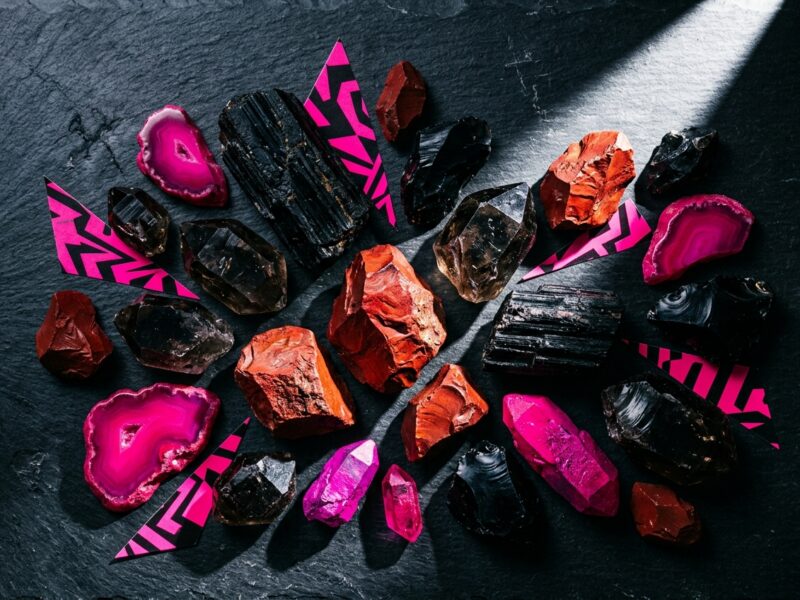
The strongest tool in any circle casting is visualization. The more clearly you can see and feel the circle forming around you, the more powerful it becomes. Physical tools — candles, crystals, a ritual broom — they support the visualization. They don’t replace it.
That said, some people find that holding something or placing objects helps them focus. If that’s you, grab what feels right. If you’re working with nothing but your own intention, that works too. Don’t let anyone tell you otherwise.
Step one: cleanse your space first
Before you cast anything, clear the room. Mentally or physically — both count.
If you want to go tangible, burning incense or using a ritual broom to sweep the perimeter works well. If you’re going mental, just take a moment to consciously push out whatever energy has been sitting in that room. The argument you had earlier. The stress you carried in from outside. The general chaos of existing. Gone.
You want a clean slate. Everything you build after this goes on top of that clean slate, so don’t skip it.
Step two: define where your circle actually goes
This sounds obvious but it matters — decide how big your circle is before you start.
It can be the size of a yoga mat or the size of a whole room. It just needs to be intentional. Fuzzy boundaries make for fuzzy circles.
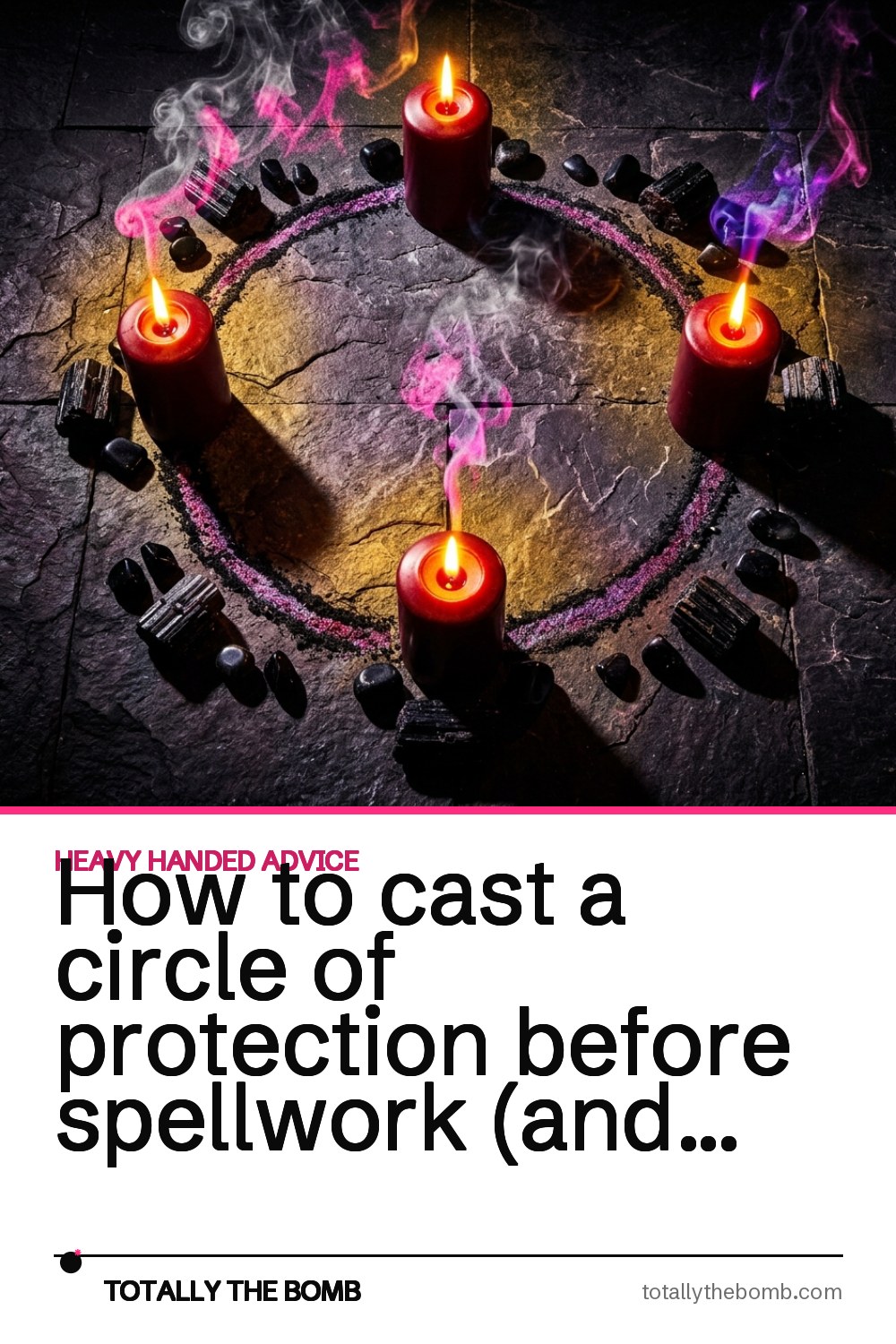
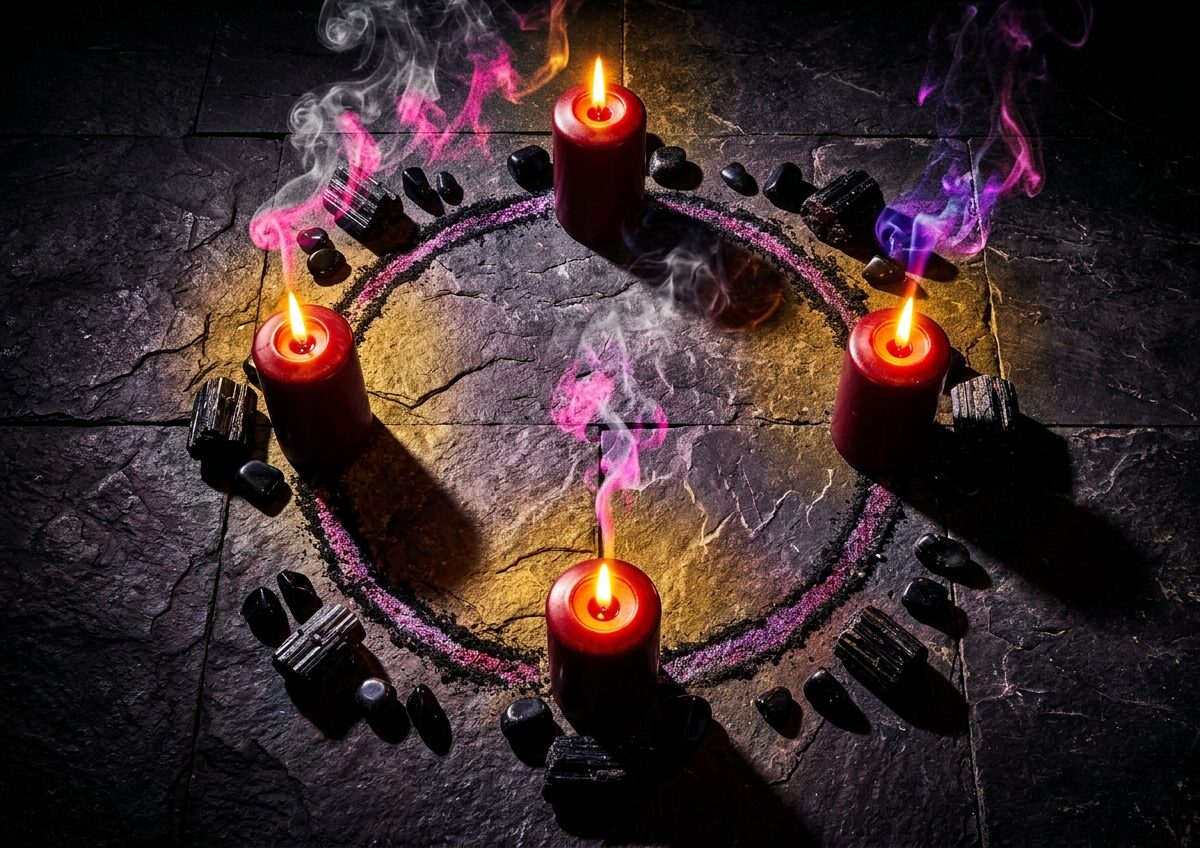
Once you’ve decided, you can mark the perimeter with candles, crystals, or salt — or just hold it in your mind. Both are valid. If you’re newer to this and find the physical markers help you stay oriented, use them. In my older post about protection spell jars, I talked about how physical anchors can really amplify the intention behind a working, and the same logic applies here.
How do you call on the elements?
This is the core of a traditional circle casting, and honestly it’s the part that feels the most ceremonial — which I think is kind of the point.
Start by facing east. That’s where air lives. Breathe deep, picture the wind moving around you, and say: “I call on you, Element of air.”
Then turn clockwise to the south — fire. Picture warmth, sunlight, a flame. Say: “I call on you, Element of fire.”
Clockwise again to the west — water. Ocean waves, a river running, rain on a window. Say: “I call on you, Element of water.”
Finally, north — earth. Feel the ground under your feet. Smell dirt after rain. Get grounded in it. Say: “I call on you, Element of earth.”
Once you’ve called all four, visualize roots growing down from your feet into the earth. Feel energy rising back up through them, filling you. When that feeling peaks, say: “With these elements through the spirit, I cast a circle of protection above, below, and within.”
Then close your eyes and see it. The whole circle, complete.
Visualizing the circle closed
After you’ve called the elements, the visualization is what actually seals the thing.
See the circle extending out from the boundary you defined — not just flat on the floor, but rising up and over you like a dome. Some people see it as white light. Some see it as golden. Some feel it more than see it. Whatever shows up for you is correct.
When you can feel the circle complete all around you, say: “The circle is cast. So it is.”
That’s it. That’s the close.
Should you use candles, and what colors?
Candles are optional but they add a lot — there’s something about a physical flame at each direction that makes the whole thing feel more real, and I think that feeling is actually doing work.
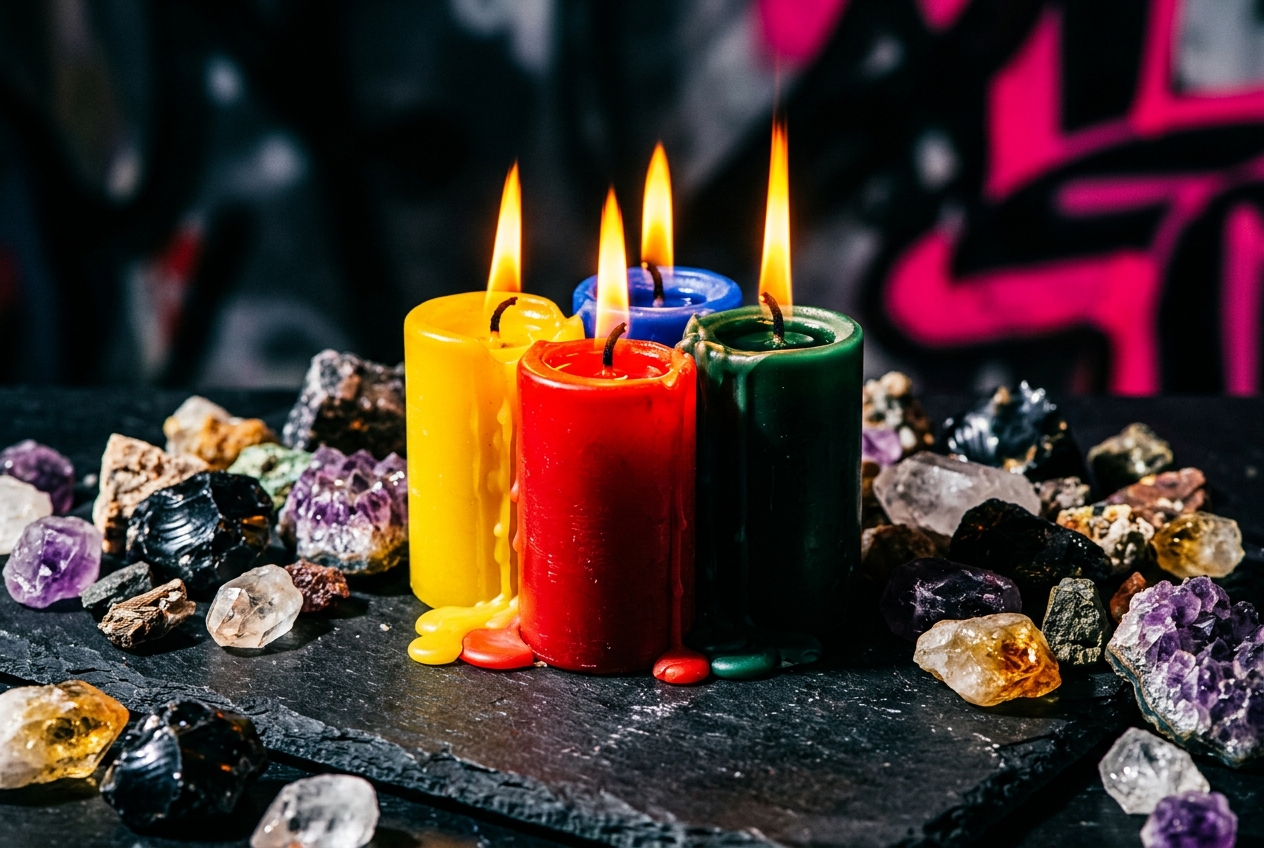
If you use candles, place one at each of the four directions as you call on each element. You can use all white candles, which work for everything. Or you can color-coordinate: yellow for air (east), red for fire (south), blue for water (west), green for earth (north).
Neither approach is more correct. Pick what feels like yours.
Can you leave the circle before you close it?
Yes, but do it intentionally. Don’t just wander out.
The traditional method is to use a wand or athame to cut a doorway in the boundary — physically gesture a door shape through the perimeter, step out, and when you come back, seal it behind you the same way.
If you don’t have either of those tools, visualize the same thing. Draw the door with your hand. Step through. Close it. It works.
Leaving carelessly — just drifting out mid-ritual — isn’t dangerous exactly, but it weakens the boundary you worked to build. Treat the circle like it’s real and it will act like it’s real. That’s kind of the whole deal.
How do you close the circle when you’re done?
Closing is just opening in reverse. Start at the north, thank each element, and move counter-clockwise back to east.
Once you’ve released all four elements, say something to officially close — “The circle is open but unbroken” is traditional, but whatever feels like a real ending to you is fine. Blow out any candles. Take a few grounding breaths.
If you want to go deeper on what comes after the circle — the actual spellwork inside it — I’ve got a full breakdown of protection spells that pairs well with this.
What if you’re skeptical about whether any of this works?
Honest answer: a lot of witchcraft researchers and practitioners argue that the circle works because ritual creates psychological containment — a boundary in your mind that helps you focus intention more powerfully. Research on ritual behavior from the American Psychological Association suggests that deliberate ritual actions genuinely reduce anxiety and increase feelings of control, which tracks.
So even if you’re on the fence about the metaphysics, the structure of a circle casting isn’t doing nothing. It’s focusing you. It’s clearing out the noise. And that alone is worth something.
But what do I know?
The circle of protection isn’t this complicated thing you have to do perfectly or it doesn’t count. It’s a practice. It gets stronger the more you do it, and the more you trust it.
Start simple. Clean your space, define your boundary, call the elements, see the circle close. Do that a few times and you’ll start to feel the difference between walking into a space you’ve prepared and one you haven’t.
And if you’re just starting out and want to build your practice from the ground up, check out my post on moon rituals — it pairs really well with circle work.
Frequently asked questions
What is a circle of protection in witchcraft?
Do you need tools to cast a circle of protection?
What are the four elements in a circle casting?
Can you leave the circle before closing it?
What do you say when casting a circle of protection?
What candle colors do you use for a protection circle?
How do you close a circle of protection when you’re done?