You know that feeling where nothing is technically wrong but everything feels slightly… wrong? You’re tired but can’t sleep. Annoyed but can’t explain why. Like you’re running on a signal that keeps dropping.
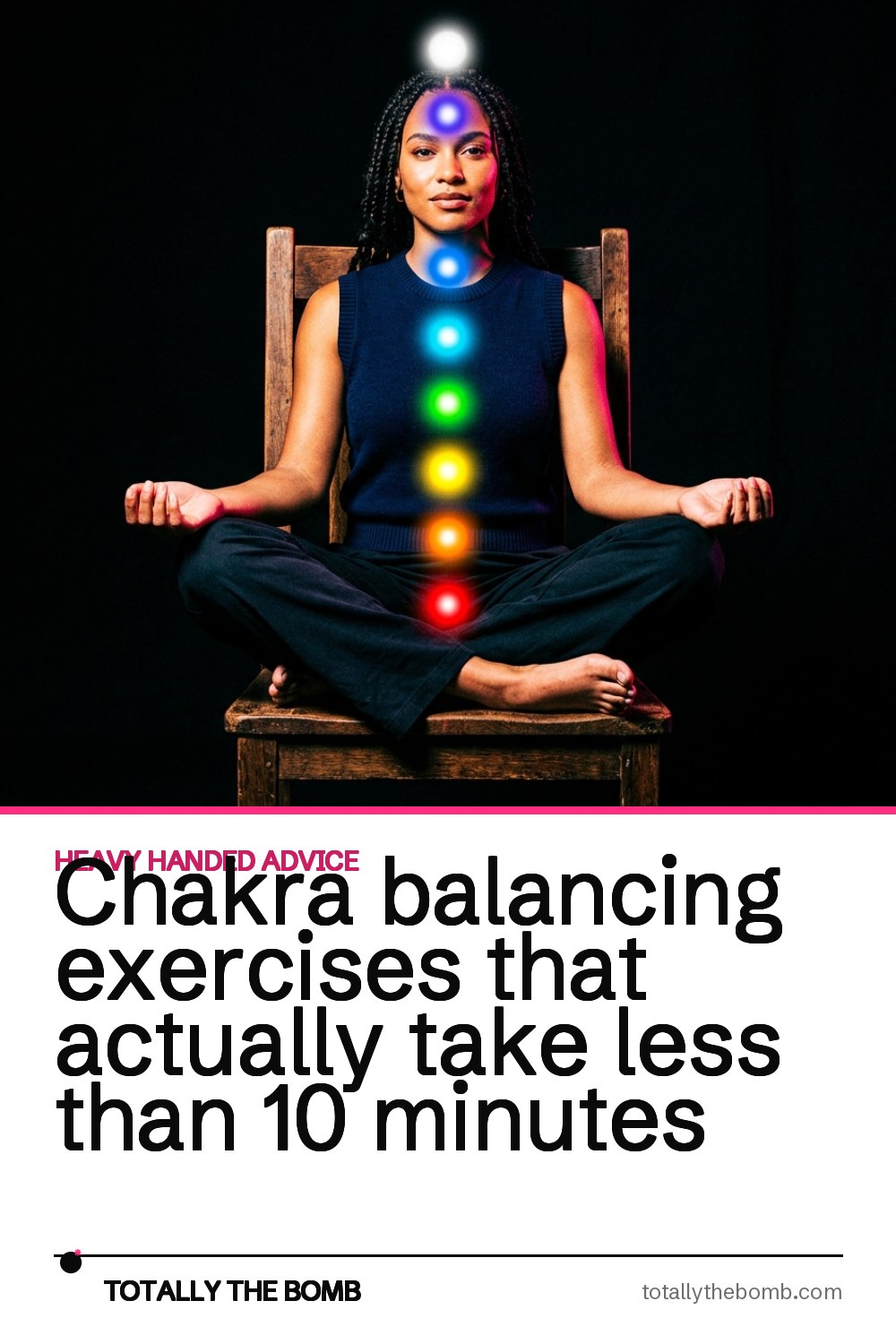
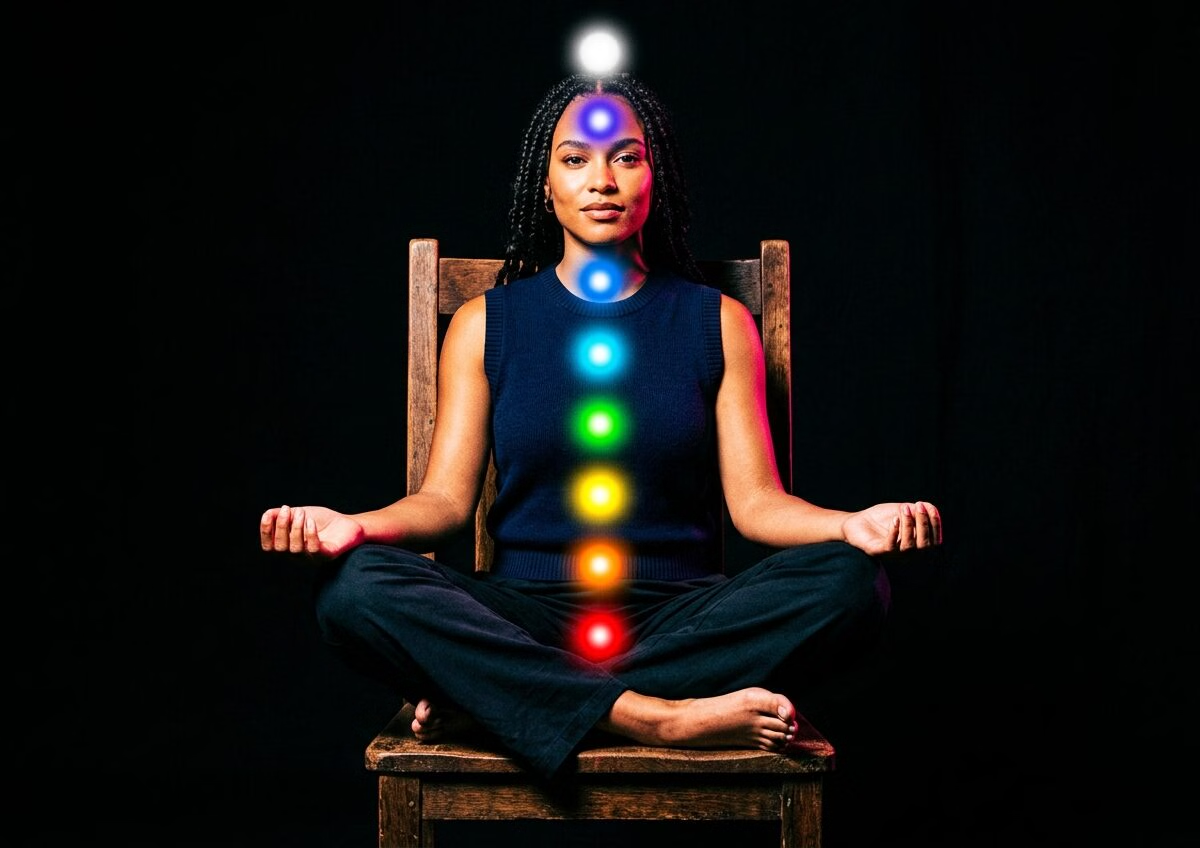
That’s usually your cue to check in with something beyond the physical stuff. Your chakras — seven energy centers that run from the base of your spine to the top of your head — have a lot to say about why you feel the way you feel. When they’re flowing, you feel like yourself. When they’re blocked, you feel like a car with the parking brake on.
Here’s the thing: you don’t need a two-hour ritual or a special room or a crystals budget to do something about it. These exercises take five to ten minutes, tops.
Why do blocked chakras actually make you feel bad?
Blocked chakras aren’t just a vibe — they show up in real, annoying, physical ways. When your energy centers are out of whack, you might notice anxiety that won’t quit, trouble concentrating, sleep that leaves you more tired than before, or a general sense that nothing is going your way no matter what you try.
Each of the seven chakras — root, sacral, solar plexus, heart, throat, third eye, crown — corresponds to a different part of your life and body. When one is blocked, the whole system gets sluggish. Think of it like a traffic jam. One blocked lane and suddenly everyone’s sitting still.
The good news is that you don’t have to fix all seven at once. Sometimes just getting the energy moving again — anywhere — is enough to feel the shift.
What are the seven chakras and where are they?
Quick cheat sheet before you start, because it helps to know what you’re working with:
- Root chakra — base of your spine/tailbone
- Sacral chakra — just below your navel
- Solar plexus chakra — just above your navel
- Heart chakra — at your chest
- Throat chakra — at your throat
- Third-eye chakra — between your eyebrows
- Crown chakra — top of your head
You can do targeted work on one specific chakra, or you can do a full-sweep exercise that moves through all of them. I’m going to give you both options below — because honestly, some days you know exactly what’s blocked, and some days it’s just… everything.
If you want to dig deeper into what each of these actually governs, I wrote about it in my breakdown of what chakras even are and why they matter. Worth the read before you start.
Does deep breathing actually do anything for your chakras?
Deep breathing is the most underrated chakra tool in existence, and most people completely skip it because it sounds too simple. It isn’t.
When you breathe with intention and trace that breath through your energy centers, you’re essentially giving your whole system a manual flush. It takes maybe three minutes. Here’s what to do:
Step 1: Sit in a chair with your feet flat on the floor. Find the natural curve of your spine — don’t force it, just let it settle.
Step 2: Relax your shoulders. Rest your hands in your lap.
Step 3: Close your eyes or soften your gaze toward the floor.
Step 4: Inhale slowly through your nose. As you breathe in, visualize energy pulling up from the earth, entering at your tailbone, and traveling all the way up your spine to the crown of your head.
Step 5: Exhale slowly through your nose. Visualize that same energy flowing back down — crown to tailbone, back to the earth.
Step 6: Repeat at least three times. More if you need it.
That’s it. Seriously. Three rounds of this and most people already feel a little less like a scrambled signal.
How does color meditation help balance specific chakras?
Every chakra has a color, and using that color intentionally during meditation is one of the fastest ways to target a specific block. Each one corresponds like this:
- Red — root chakra
- Orange — sacral chakra
- Yellow — solar plexus chakra
- Green — heart chakra
- Blue — throat chakra
- Indigo — third-eye chakra
- White — crown chakra
To work on a specific chakra: picture its location in your body, imagine that color glowing and expanding outward from that point, then breathe into it. Draw the breath from the center of the earth up through you. Let the color get brighter with each inhale.
I like to start at the root and work my way up through all seven. It takes maybe five to eight minutes if you spend a breath or two at each one. You’ll usually notice pretty quickly if one feels heavier or harder to visualize — that’s the one that needs the most attention.
And honestly? Even if you’re skeptical, this is just a focused breathing and visualization exercise. Research on mindfulness meditation consistently shows it reduces stress and improves emotional regulation. The color part is just a really useful anchor for your attention. Call it what you want — it works.

Can your voice actually balance your chakras?
This one sounds the most out-there, and I get it. But vocal toning — using sound vibrations to shift energy — has been part of healing traditions across cultures for thousands of years. The basic idea is that specific pitches resonate with specific energy centers.
You don’t have to be a singer. You don’t need a great voice. You just need to be willing to make some noise by yourself for a few minutes.
Here’s how to do it:
Step 1: Place both hands over the area where you feel the block or imbalance.
Step 2: Draw your voice from your diaphragm — not your throat — and start at your lowest comfortable pitch.
Step 3: Let your tone gradually rise in pitch, slowly, without forcing it.
Step 4: When you hit a pitch that makes that area feel lighter or tingly or just… different, hold it there. Breathe and keep toning until it shifts.
You can do this for one chakra or run the full ladder from root to crown, starting low and ending high. It feels a little silly the first time. Do it anyway.
If you’re curious about pairing sound work with other tools, I’ve talked about using crystals to support your root chakra — it’s a good companion practice for the toning exercise especially.
How often should you do chakra balancing exercises?
Honestly, whenever you feel like you need it. There’s no wrong answer here. Some people do a quick breathing exercise every morning as a reset. Some people only pull these out when things feel particularly sideways. Both are fine.
The more you practice, the faster you’ll recognize which chakra is talking when something feels off. Over time it starts to feel less like a spiritual practice and more like just… knowing your own body. Which, when you think about it, is the whole point.
But what do I know? Try one of these the next time you feel like your signal is dropping and see what happens.
You don’t need a perfect meditation space or an hour of free time to get your energy back on track. Three minutes of intentional breathing is a legitimate place to start.
If you want to go deeper — crystals, yoga poses targeted at specific chakras, sound bowls — there’s a whole world there. But the basics work. And the basics are free and quiet and you can do them sitting in your car before you walk into whatever awaits you.
Start there.
Frequently asked questions
How do I know if my chakras are blocked?
How long does it take to balance your chakras?
Can beginners do chakra balancing exercises?
What is the best chakra balancing exercise for anxiety?
What colors correspond to each chakra?
Does vocal toning really work for chakra balancing?
How often should I do chakra balancing exercises?