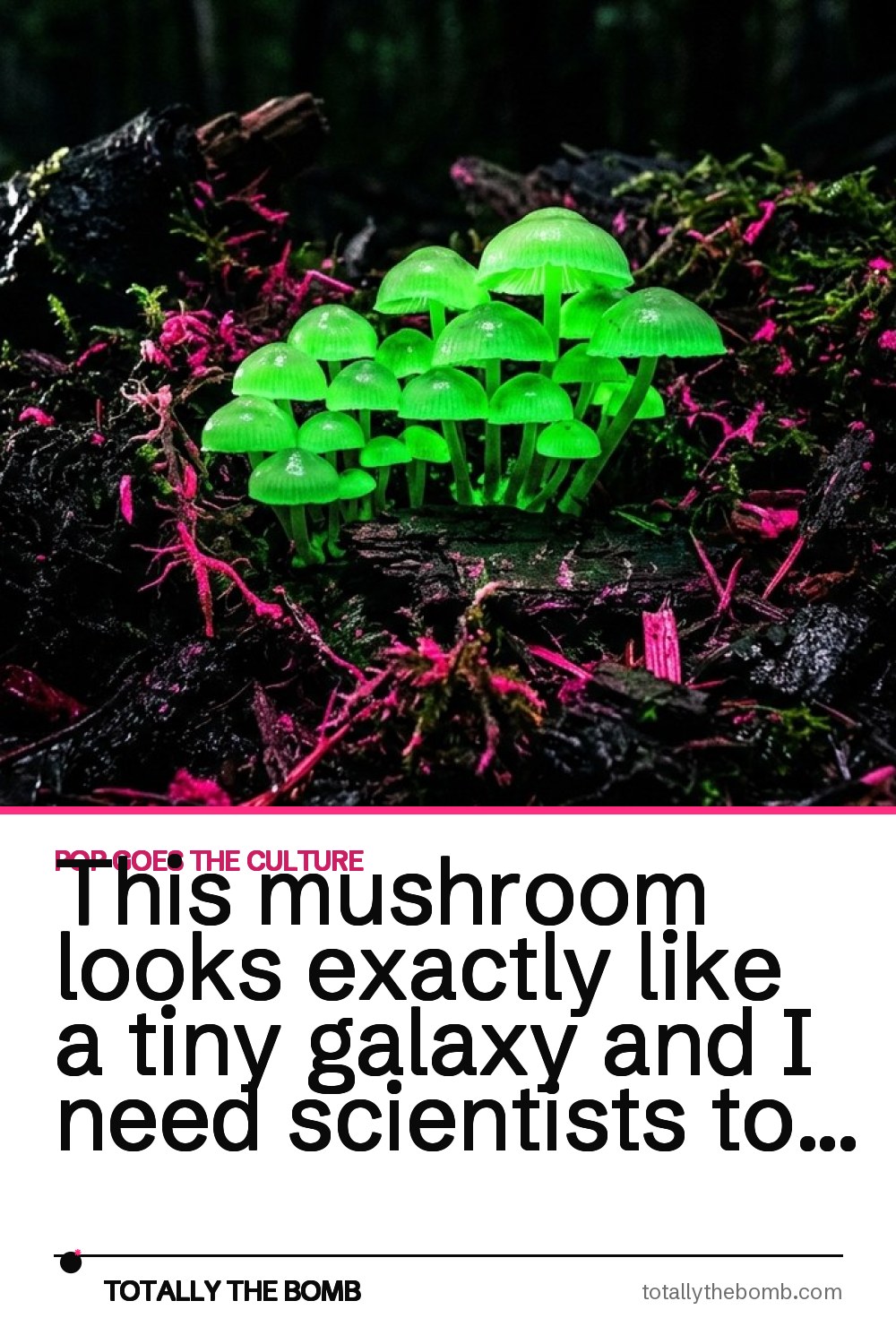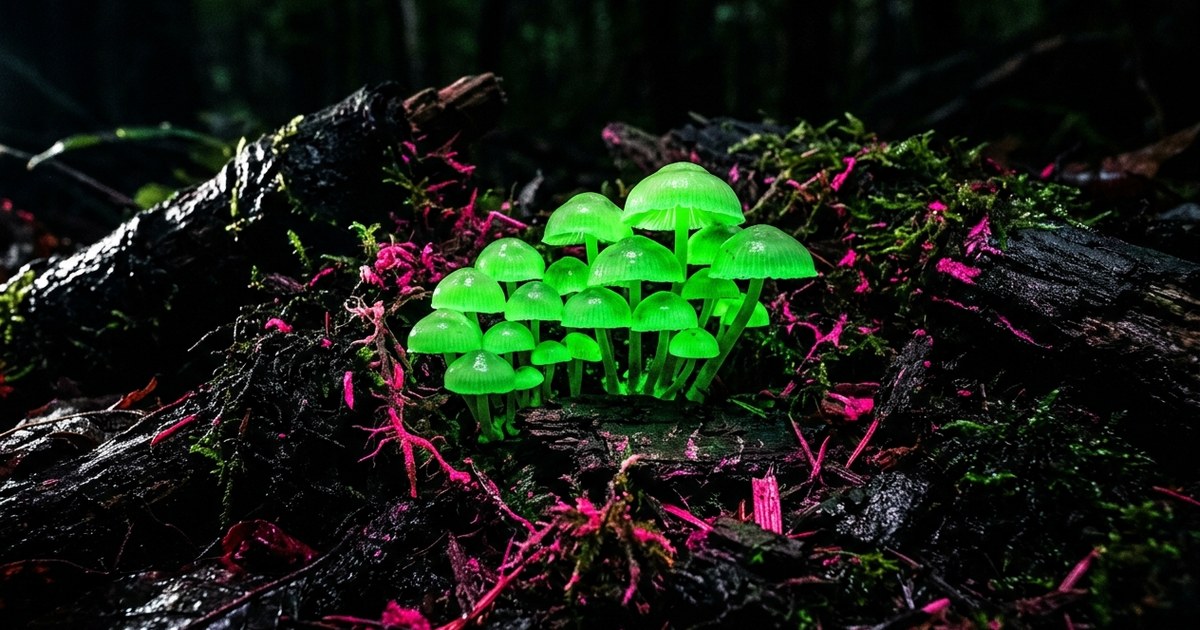
Okay, so I am scrolling through the internet — as one does at whatever hour this was — and I come across a photo of a mushroom that looks like it was designed by someone who had just watched too many nature documentaries and one too many laser shows.
It’s tiny. It glows. It looks like a miniature galaxy sitting on a log in the middle of a forest. And I just need to sit with that for a second.
Nature made this. On purpose. Nobody asked for it. It’s just out there, in the dark, being a whole entire spectacle.
What exactly IS this glowing mushroom?
The mushroom everyone is losing their minds over is called Mycena chlorophos, and it’s one of roughly 100 known species of bioluminescent fungi on the planet. It grows in subtropical forests — think Japan, Brazil, parts of Australia — and it emits a soft, steady green glow that is genuinely, objectively gorgeous. Not a trick of the camera. Not a filter. Just a mushroom doing that.
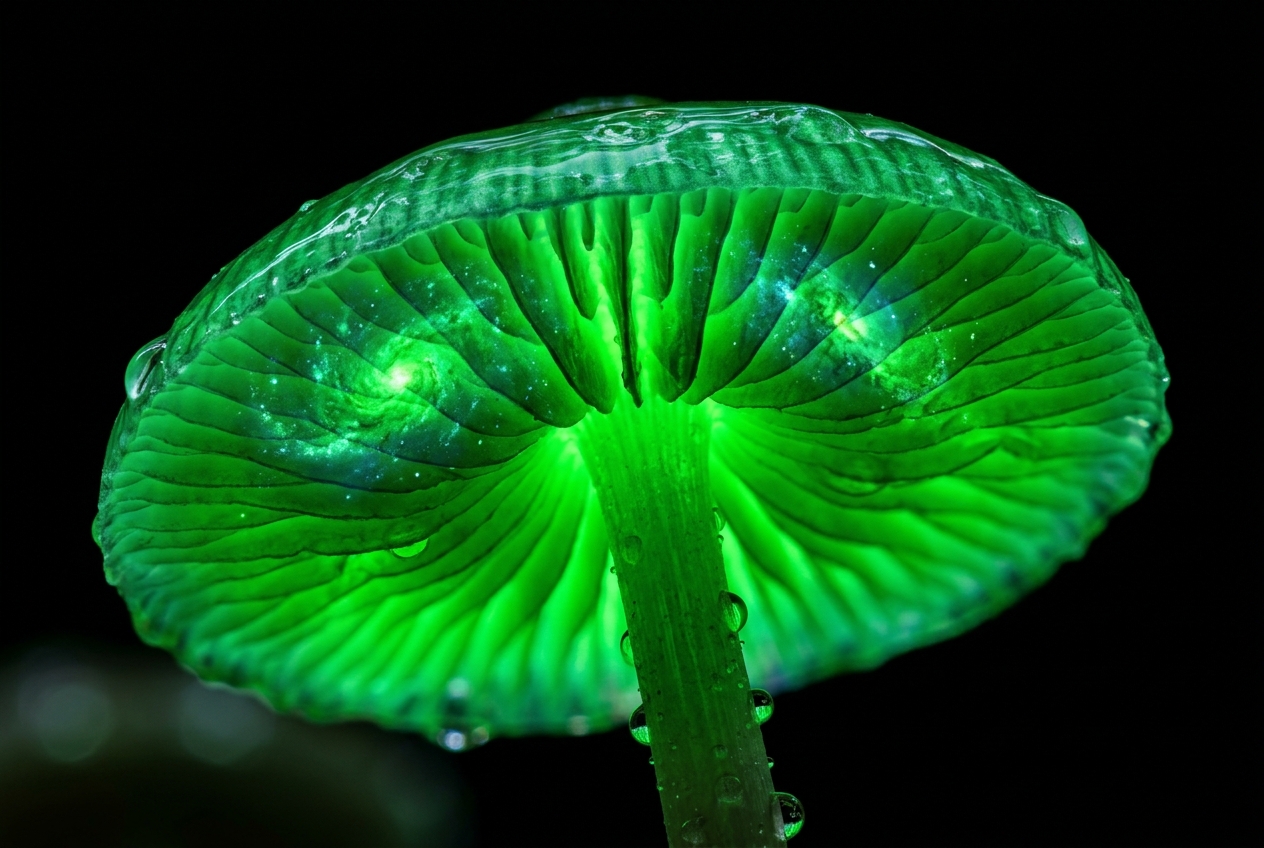
The cap is translucent and pale, and when the bioluminescence kicks in, it looks like something between a tiny jellyfish and a star cluster. Scientists have been studying this thing since the 1800s and somehow managed to keep it a secret from the rest of us.
Why does it glow? Is this just showing off?
Technically, bioluminescence in fungi comes from a chemical reaction — a compound called luciferin reacts with oxygen, and light happens. No heat. Just light. Researchers published a study in 2015 that actually mapped out the metabolic pathway that makes it work, which is cool science, but also kind of unsatisfying as an answer.
Because the real question isn’t how. The real question is why.
The leading theory right now is that the glow attracts insects at night — bugs see the light, land on the mushroom, and then carry the spores somewhere else. Basically, the mushroom invented its own delivery system. Which is either genius or terrifying depending on how you feel about fungi.
Does bioluminescence actually help the mushroom survive?
Honestly, scientists aren’t totally sure yet — and that’s the part that keeps me up at night. Some bioluminescent fungi glow in their caps, some in their stems, some only in the mycelium underground. The location of the glow doesn’t always line up neatly with the insect-attraction theory, which means there might be something else going on entirely.
One alternate idea is that it’s just a byproduct — a side effect of other chemical processes happening in the fungus. Which would mean the galaxy aesthetic is completely accidental. Nature just tripped and created something beautiful, the way I accidentally make a really good sandwich sometimes.
But what do I know?
How many of these are actually out there right now?
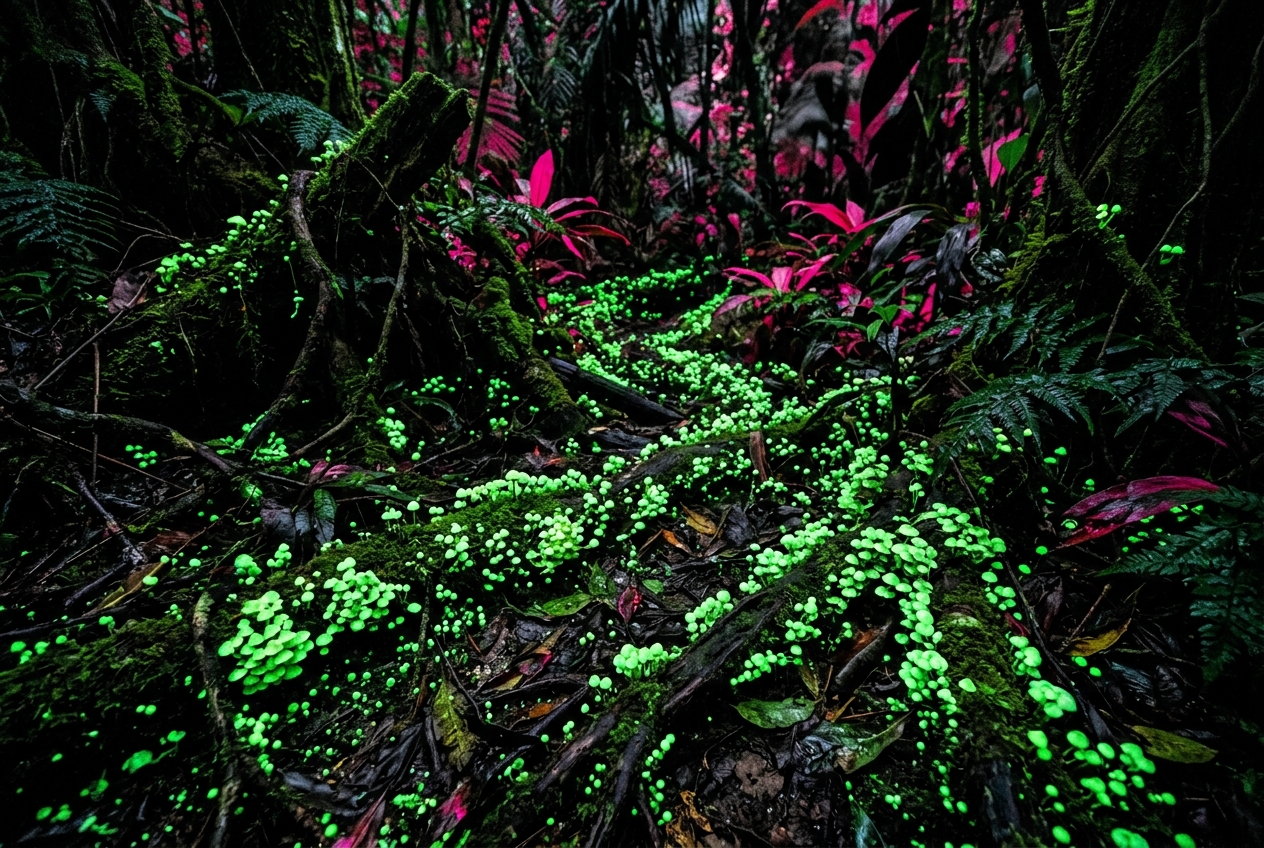
About 100 species of bioluminescent fungi have been identified so far, scattered across forests worldwide. Most of them are tiny. Most of them glow at night, when nobody is watching. They’re just out there in the dark, glowing away, completely unbothered.
The ones that go viral tend to be the Mycena genus — there are several glowing species in that family — and the photos that circulate online are almost always from Japan or Brazil, where some forests have so many of them clustered together that the forest floor actually looks lit up.
I don’t want to be dramatic, but that sounds like the most incredible thing a forest has ever done.
Could this actually lead to something useful?
Yep — and this is where it gets genuinely interesting. Bioluminescence research has already given us tools used in medicine, cancer research, and genetic science. Scientists use glowing proteins (including ones derived from bioluminescent organisms) as markers to track what’s happening inside cells. If they can fully decode how fungi produce their light, there are real applications in biosensors and even sustainable lighting down the road.
The Smithsonian covers the broader bioluminescence-in-science angle pretty well if you want the full nerdy rabbit hole. Worth the click.
So the glowing mushroom isn’t just pretty. It might actually be useful. Nature is out here doing research and development and we’re over here arguing about whether pineapple belongs on pizza.
Should you go looking for glowing mushrooms?
If you live anywhere near a subtropical or humid temperate forest, the answer is yes, obviously. The best time is right after rain, in the warmest months, and you need it to be genuinely dark — your eyes should be adjusted for at least 20 minutes before you start looking. Bring someone with you. Don’t eat anything you find in the dark. That last one is more of a general life rule.
If you’re in my last deep-dive into things nature invented that feel made-up, you already know I have a whole thing about how consistently weird and spectacular the natural world is when nobody’s paying attention to it.
I keep coming back to the fact that these mushrooms have been glowing in forests for millions of years and the vast majority of humans have just never seen one. They don’t need us to see them. They’re not doing it for us.
That’s either deeply humbling or deeply rude, and I haven’t decided which.
Either way, I need to go find one in real life. Preferably while wearing something that also glows, because if I’m going to be in the galaxy mushroom forest, I’m committing to the bit.
Frequently asked questions
What is the mushroom that glows like a galaxy?
Why do some mushrooms glow in the dark?
How many species of glowing mushrooms exist?
Is bioluminescence in mushrooms dangerous?
Can you see glowing mushrooms in the wild?
What is luciferin in mushrooms?
Are glowing mushrooms used in science?