
The saying goes ‘sticks and stones may break my bones but words will never hurt me.’ Which, respectfully, is completely wrong. Words are doing things to us all the time — we just don’t pay close enough attention.
The ancient sages of India were paying attention. They figured out something we’re only recently catching up to: that sound has power, and certain sounds have a lot of it. That’s the whole deal with mantras.
Now, ‘mantra’ gets thrown around a lot — your morning affirmation isn’t technically a mantra, your boss’s quarterly strategy definitely isn’t a mantra — so let’s actually talk about what it is, where it came from, and how you find the one that’s right for you.
What is a mantra, really?
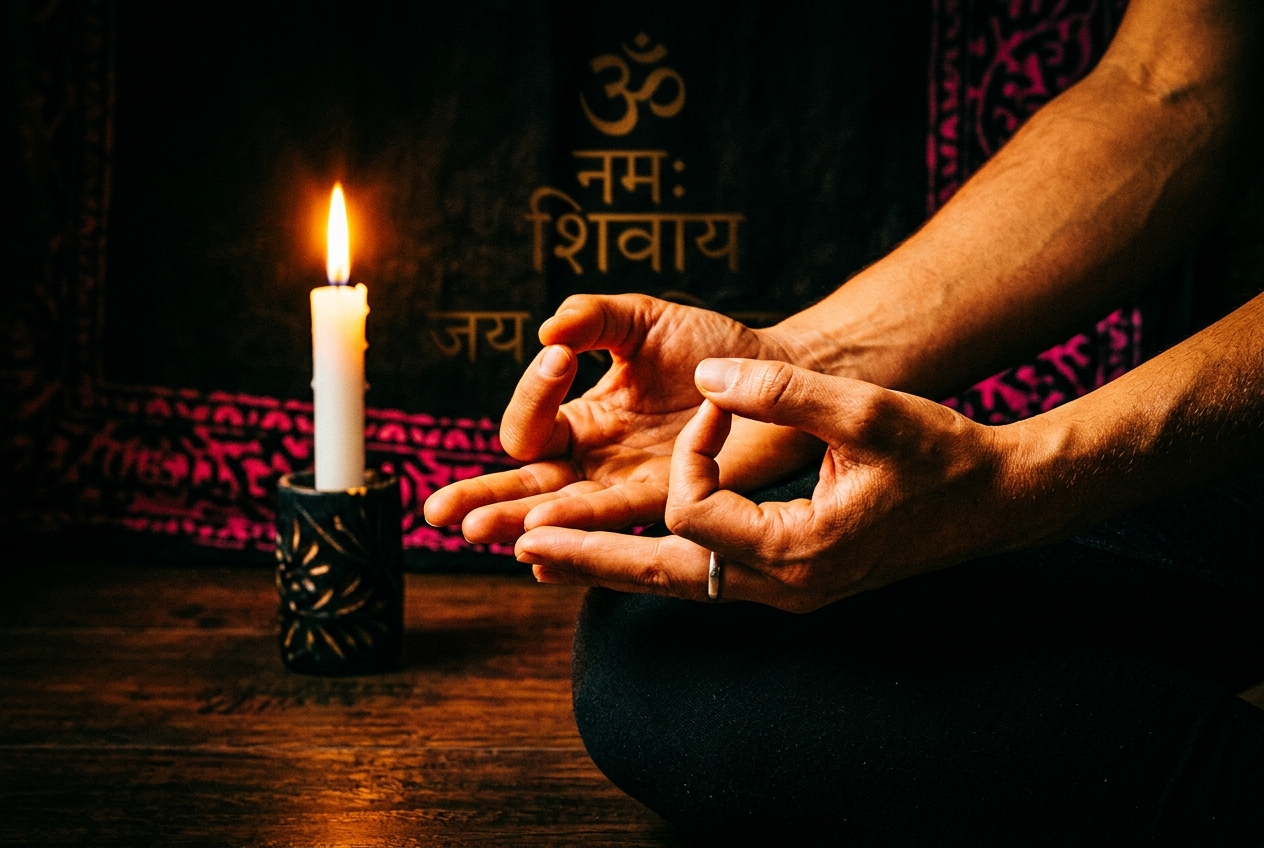
A mantra is a formula of sacred syllables with roots going back thousands of years in India. In Sanskrit, ‘man’ means mind and ‘tra’ means vehicle or instrument — so a mantra is literally a vehicle for the mind. Not a bumper sticker. A vehicle.
For the ancient seers — the Rishis — mantras weren’t casually googled. They were revealed only after reaching profound states of meditation, and then kept secret, passed from guru to student when the student proved themselves ready. Think less ‘wellness app’ and more ‘here is the thing I’ve protected for decades, don’t blow it.’
Over time, many mantras became available for wider use. Not all of them — some remain held close by specific lineages — but plenty of genuinely powerful ones are accessible now. The question isn’t whether you can find one. It’s whether you’re picking the right one.
Are mantras and affirmations the same thing?
They’re not, and the difference matters. An affirmation is something like ‘I am worthy’ or ‘I am enough’ — a statement you’re choosing to believe, repeated until it sticks. Totally valid. But a mantra is a sacred syllable or phrase with its own vibrational weight, independent of your particular mood that morning.
That said — if you’ve never chanted anything out loud before, starting with affirmations in your own language isn’t the worst idea. Not because they’re equivalent, but because the self-consciousness of talking out loud to yourself is real. Warming up to the practice before jumping into Sanskrit makes sense.
Once you’re past the ‘I feel like an idiot’ phase, you’re ready for the actual thing.
Should you start with a short mantra or a long one?
Start short. Bija mantras — seed mantras — are single syllables, and they’re a legitimately good place to begin. ‘Om’ is the most well-known. There are others tied to specific intentions and energies.
From there, you can move into Saguna or Nirguna mantras, which are longer and more complex. But there’s no spiritual prize for jumping ahead. A shorter mantra chanted with full focus will do more for you than a longer one you spend half your session trying to remember.
This isn’t a competition. The only thing you’re competing against is your own scattered thoughts — and a seed mantra is more than enough for that fight.

How do you actually choose a mantra that fits?
This is where it gets personal, and honestly, there’s no single right answer — but there are a few things worth thinking through.
Get clear on your intention first. What are you trying to move toward — or let go of? What’s the thing underneath the thing you keep worrying about? Mantras work best when they’re aimed at something real, not something vague. ‘I want to feel less terrible’ is a start. ‘I want to release the anxiety I carry about things I can’t control’ is a target.
Then trust your instincts. If you’re reading through a list and something stops you — something just lands differently — that’s worth paying attention to. I don’t know how to explain why that happens. But it does, and dismissing it is usually a mistake. Your gut knows things your analytical brain hasn’t caught up to yet.
Check in with your feelings, not just your logic. What makes sense to your head might not be what your heart actually needs right now. If you’re grieving something, a mantra about abundance might feel completely off. If you’re feeling unmoored, something grounding might resonate more than something expansive. Pay attention to that gap between what you think you should want and what actually resonates.
Make sure you can remember it without effort. This one sounds obvious but people skip it. If you’re spending your meditation time trying to recall the words, you’re not meditating — you’re studying. The mantra should eventually disappear into the background of your focus, not become the focus itself.
Does it matter where your mantra comes from?
Some people feel strongly that mantras should come from a teacher — that the transmission matters, that a mantra given by a guru carries something a googled mantra doesn’t. I think that’s a conversation worth having honestly rather than dismissing.
The counterpoint — and it’s a fair one — is that access to ancient practices has widened, and people have had genuinely meaningful experiences with mantras they found on their own. Research into meditation more broadly suggests that focused repetition of sound can meaningfully reduce stress and improve concentration, regardless of the specific tradition you come from.
What I’d say is this: respect where it comes from. Don’t treat it like a playlist shuffle. If you’re drawn to a mantra from a specific lineage, take a minute to understand what it means and why it exists before you start using it. That’s just basic respect for something that isn’t yours originally.
If you want to go deeper on the meditation side of all this, check out what I’ve put together on building a real meditation practice — because picking a mantra is one piece of a bigger picture.
How do you know if a mantra is working?
Honestly — you feel it, or you don’t. That’s the least satisfying answer and also the most accurate one.
You might notice it’s easier to settle your mind when you’re using it. You might notice a shift in how you’re carrying something — a worry, a grief, a pattern — over weeks of consistent practice. It’s not a light switch. It’s more like a slow adjusting of the dial.
If a mantra feels completely wrong after genuine effort — not just uncomfortable, but wrong — you’re allowed to try a different one. You’re not locked in. The goal is a tool that helps you go deeper, not one that keeps you stuck at the surface.
Words aren’t neutral. They never were. The ancient people who figured that out and built an entire practice around it were onto something the rest of us are still working to catch up to.
You don’t need a guru on a mountaintop to start. You need clarity about what you’re actually after, enough patience to start simple, and the willingness to sit with yourself long enough to let something land.
But what do I know? Start with Om and see what happens.
Frequently asked questions
What is a mantra and how is it different from an affirmation?
What mantra should a beginner start with?
How do I know which mantra is right for me?
Do I need a teacher or guru to pick a mantra?
How long does it take for a mantra to work?
Can I switch mantras if one doesn’t feel right?
What’s the difference between a Bija mantra and a Saguna or Nirguna mantra?