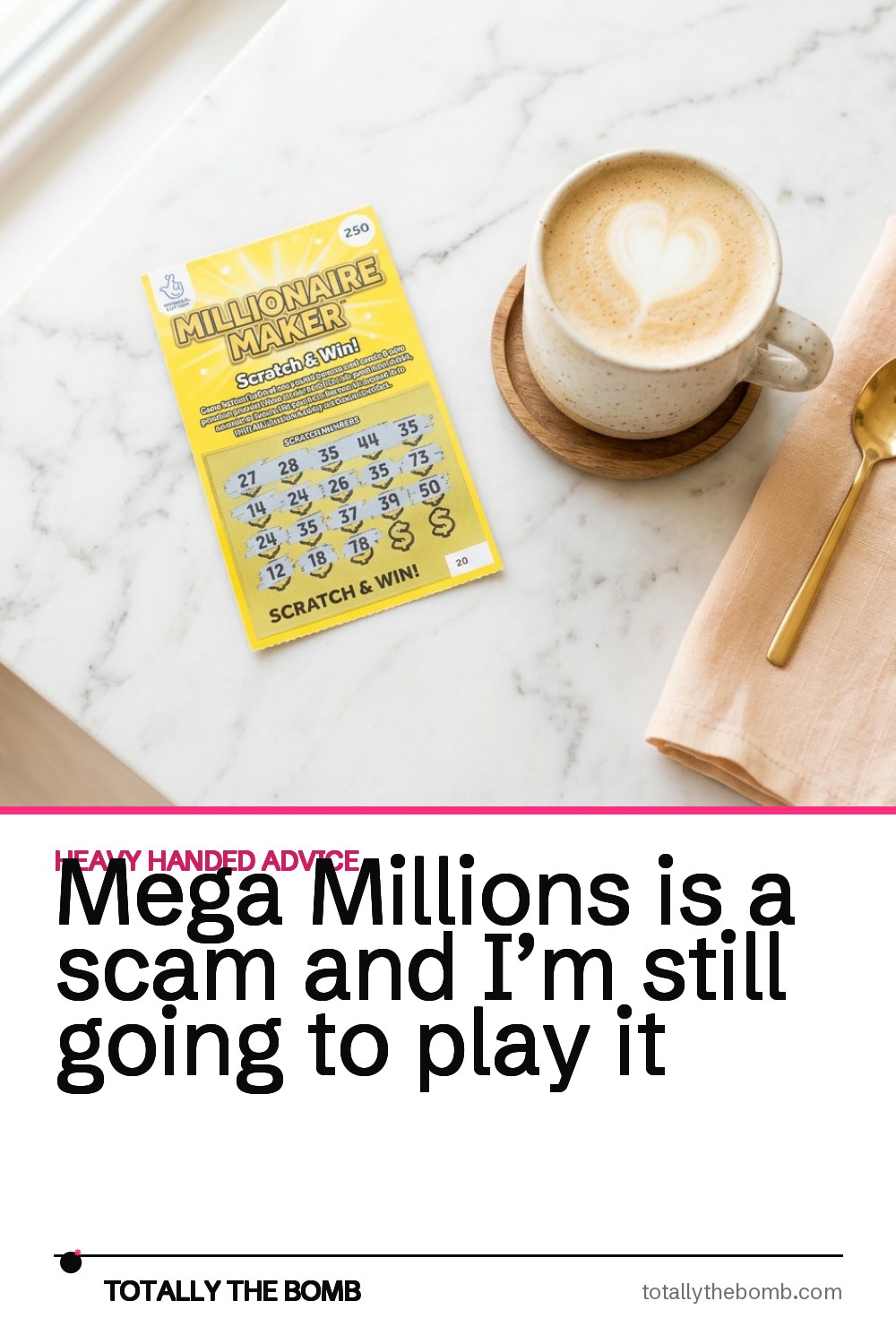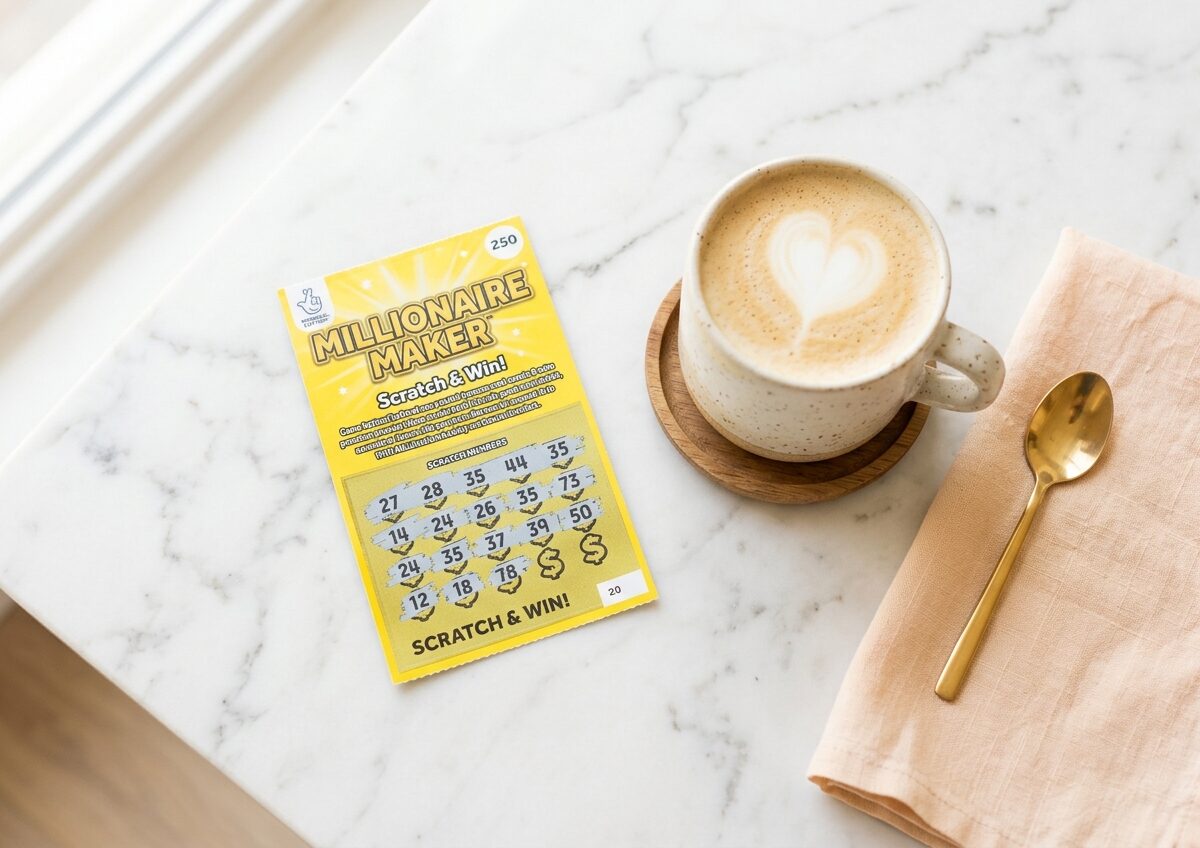
There is a 1 in 302,575,350 chance I am going to win Mega Millions. I looked that number up. I stared at it. I bought a ticket anyway.
Look, I am not going to sit here and tell you the lottery is a good investment. It’s not. It makes sense because it literally cannot be — the entire system is engineered so the house always wins, always, forever, amen. The jackpot gets big specifically because nobody is winning it.
And yet. The jackpot is enormous right now and I have two tickets sitting in my wallet and I feel genuinely great about it. So let’s talk about that.
Is the lottery actually a scam, technically speaking?
Yes. Absolutely. The expected value of a Mega Millions ticket is always negative — meaning on average, every dollar you spend returns less than a dollar. Even when the jackpot climbs into the billions, the lump sum payout is roughly 60% of the advertised number, then you hand a chunk to federal and state taxes, and suddenly your billion dollars is closer to $400 million. Which is still a lot! But the math still doesn’t work in your favor when 302 million other people are all holding tickets with the same dream.
The house always wins. That’s not cynicism, that’s arithmetic.
So why do 100 million people still play?
Because hope is cheap and the lottery is selling it at a dollar a ticket.
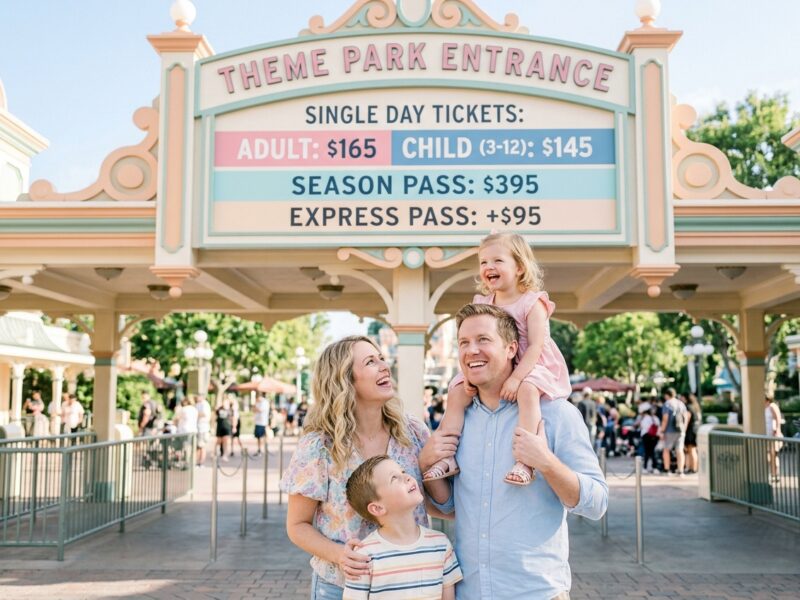
This is the part people get embarrassed to admit — buying a lottery ticket isn’t really about thinking you’ll win. It’s about buying a few days where you get to ask yourself, sincerely, what would I actually do? What would change? Would I call in to quit my job out loud, in full sentences, or would I just stop showing up? Would I finally — FINALLY — not look at the price tag first?
That fantasy has value. Real, measurable, emotional value. It’s not irrational to pay a dollar or two for something that genuinely makes you feel something.
The irrational part is spending your rent money on scratch cards. That’s different. That’s where it gets dark.
What’s the actual argument against playing?
The strongest case against the lottery — and I’ll give it a fair shot here — is that it disproportionately pulls money from people who can least afford to lose it. Research consistently shows that lottery ticket sales are highest in lower-income communities, which means the people spending the most on tickets are the people for whom that money matters most. That’s not nothing. That’s actually a serious structural problem and it’s worth sitting with.
The lottery, at scale, functions as a regressive tax dressed up in neon signs and a cartoon ball machine. I don’t love that.
And yet — I still don’t think buying one ticket, eyes open, makes you a sucker.
Does knowing the odds make it worse or better?
Better, honestly. Knowing the odds is what separates a two-dollar daydream from a gambling problem.
When you know it’s 1 in 302 million and you buy one ticket and laugh about it, you’re playing a different game than someone who has convinced themselves they have a system. You’re not delusional. You’re consciously buying into an absurdity because it’s fun for approximately 72 hours until the numbers get drawn and you go back to your regular life.
That 72 hours is worth two dollars to me. Easily.
What would I actually do with the money?
Okay so I have thought about this way too much.
First thing — and I have read enough of these winner horror stories to know this — you say nothing to nobody. You get a lawyer. You set up a trust. You claim the ticket as the trust. You become briefly the most secretive person alive.
Then you pay off everything that feels like a weight. You build a cushion so thick that money stops being a construct that controls you, which is all any of us are really out here trying to do anyway. You figure out what you’d be doing if money weren’t the thing stopping you — and you do that instead.
For me, that answer is this. Writing stuff that matters, somewhere that feels like mine. Which it makes sense because I already do that. But it’d be nice to do it without checking the numbers first.
My honest defense of still buying a ticket
Here’s the thing — I’m not defending gambling. I’m defending the specific, conscious, occasional choice to buy a ticket when the jackpot hits a number that breaks your brain, have fun with it for a couple of days, and let it go when the numbers don’t match.
That’s it. That’s the whole argument.
I don’t have a system. I don’t play every week. I’m not hoping the universe owes me one. I just saw a number with nine zeros behind it and thought — yeah, two dollars, why not. And if you want more of my half-baked thoughts on money doing weird things to people’s brains, I went into it a little in my take on the things we buy to feel in control.
The lottery is a scam. It’s also, occasionally, the cheapest entertainment you can buy. Both of those things are true at the same time and I think we’re allowed to hold them together without losing our minds.
The numbers are drawn Thursday. I’ll let you know how it goes.
I’m not going to win. You know it, I know it, the giant ball machine knows it.
But I spent two dollars and got three days of genuinely fun daydreaming about a life where money is just a thing I have instead of a thing that has me. That’s a better return than most things I buy.
The scam works on me. I’m clear-eyed about that. And honestly? I respect the hustle.
Frequently asked questions
What are the actual odds of winning Mega Millions?
Is playing the lottery ever worth it?
Why do people keep playing the lottery if the odds are so bad?
Is the lottery considered a regressive tax?
If I win the lottery, what should I do first?
Does the Mega Millions jackpot amount matter to the odds of winning?
Is there a difference between casual lottery play and a gambling problem?