Okay, so I have been turning this question over in my head for a while now. Chakras come from Hinduism. The Bible is, obviously, not a Hindu text. So on the surface, asking what the Bible says about chakras sounds like asking what a cookbook says about car repair.
But here’s the thing — a lot of people who consider themselves Christian are also deeply interested in chakras, energy work, and the idea that the body has spiritual centers that affect your whole life. And they don’t think they’re doing anything wrong. So are they?
I don’t know that I’m the person to settle that debate. But what I can do is look at what the Bible actually says — and what it doesn’t — and let you make up your own mind.
Does the Bible ever actually mention chakras?
The word ‘chakra’ does not appear anywhere in the Bible — not in any translation, not even close. That’s just the truth, and anyone who tells you otherwise is stretching things past their breaking point.
Chakras are a concept rooted in Hindu tradition. The word itself comes from Sanskrit, meaning ‘wheel’ or ‘disk.’ The system describes seven energy centers running along the spine, from the base up to the crown of the head. It’s thousands of years old and it belongs, originally, to that tradition.
So if you’re looking for a chapter and verse that says ‘and lo, thy root chakra shall be balanced’ — that chapter does not exist.
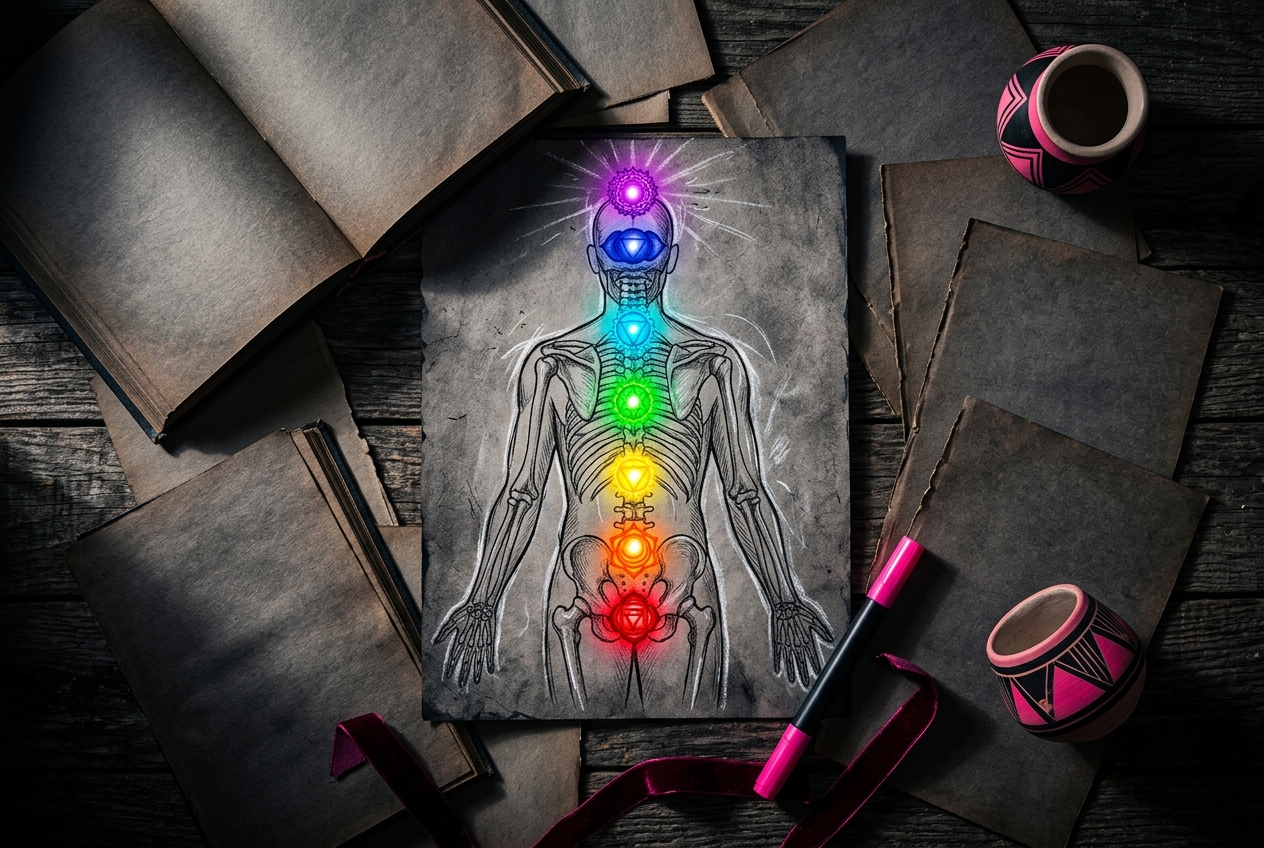
Where are the seven chakras, and why do people keep connecting them to Scripture?
Even without a direct mention, the overlap people keep pointing to is hard to fully dismiss. Here’s the quick version of where the chakras land in the body:
- Root chakra (red): Base of the spine / adrenal glands
- Sacral chakra (orange): Lower abdomen / ovaries or testes
- Solar plexus chakra (yellow): Upper abdomen / pancreas
- Heart chakra (green): Center of the chest / thymus gland
- Throat chakra (blue): Throat / thyroid gland
- Third eye chakra (indigo): Between the brows / pineal gland
- Crown chakra (violet): Top of the head / pituitary gland
Seven chakras. Seven corresponding endocrine glands. And the Bible — particularly in Revelation — has a pretty notable thing for the number seven.
That parallelism is what keeps this conversation alive.
What do Christians who engage with chakras actually point to in Scripture?
Some Christians who work with chakra concepts point to verses about power, love, a sound mind, and rootedness — and map them onto the energy center system. The most-cited passage is 2 Timothy 1:7: ‘For the Spirit God gave us does not make us timid, but gives us power, love, and self-discipline.’
Power. Love. Self-discipline (which translates more accurately from the Greek as ‘a sound mind’). People doing this kind of interpretive work see those three qualities reflected in specific chakra points — the solar plexus for power, the heart for love, the crown and third eye for mental clarity.
John 10:10 — ‘I have come that they may have life, and have it to the full’ — gets connected to the lower chakras, specifically the ideas of abundance and rootedness.
Psalm 133:1 — ‘How good and pleasant it is when God’s people live together in unity’ — gets linked to the throat chakra and the idea of communication and community.
Is this a clean theological argument? No. But it’s not random either.
Why do some Christians push back hard on this?
The concern isn’t crazy. When the Bible talks about a serpent, it’s rarely a compliment — and the kundalini energy described in Hindu tradition, which flows up through the chakras, literally translates to ‘coiled snake’ in Sanskrit. That’s enough for a lot of Christians to say hard pass, and honestly, that’s a fair read of their own tradition.
Beyond the snake imagery, the broader concern is about mixing spiritual frameworks that have genuinely different foundations. Hinduism and Christianity are not the same religion. They don’t agree on the nature of God, salvation, or the afterlife. Treating them like interchangeable spiritual buffet options flattens both traditions in a way that doesn’t really serve either one.
The Compelling Truth perspective on chakras lands pretty firmly in this camp — arguing that Scripture doesn’t support chakra-based spiritual practice and that Christians are encouraged to seek fulfillment through prayer and Scripture instead.
But what do I know? I’m not a theologian.
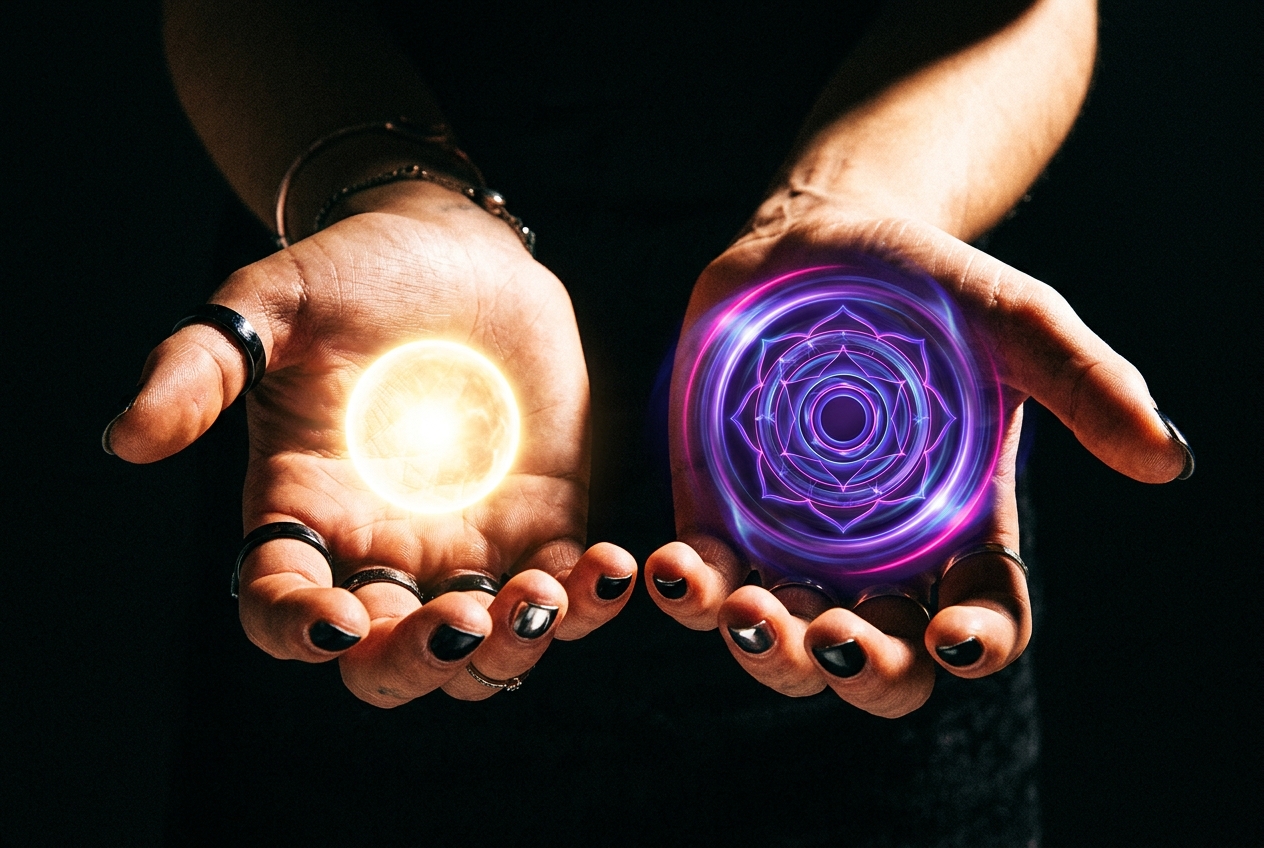
Is there a middle ground here?
Some biblical scholars and Christian writers do argue for a version of middle ground — not syncretism exactly, but the idea that God’s truth about the human body and spirit might show up across traditions in different language.
The argument goes something like this: humans have always known, on some level, that the body has spiritual significance. The idea that your inner life affects your physical health, that emotions live in the body, that something like ‘energy’ flows or gets stuck — that’s not exclusive to Hinduism. It shows up in biblical language about the heart, the gut, the breath, the hands. Maybe the chakra framework is one culture’s attempt to name something real, even if the Bible names it differently.
That’s a generous read, and not everyone will buy it. But it’s worth sitting with.
So can a Christian practice chakra work without contradicting their faith?
There’s no single answer here, and anyone who tells you there is — in either direction — is being overconfident. Thoughtful Christians disagree on this.
What most people on both sides would probably agree on: if chakra practice becomes a replacement for faith rather than a complement to it, that’s where things get tricky from a Christian standpoint. But using mindfulness, breathwork, or body-awareness practices while maintaining a clear Christian framework? A lot of believers do exactly that without feeling any conflict.
Your faith is yours to work out. I’d just say — if you’re curious, read widely and think for yourself rather than letting either the enthusiasts or the skeptics do the thinking for you.
The Bible doesn’t mention chakras. That’s just true. But ‘the Bible doesn’t mention it’ is a pretty wide net — the Bible also doesn’t mention anxiety disorders or the internet, and we still find ways to think Scripturally about both.
If you’re a Christian curious about energy work, you’re not alone and you’re not automatically doing something wrong. If you’re a Christian who thinks the whole thing is a spiritual off-ramp, that’s also a defensible position.
Mostly I just think it’s a more interesting question than either side gives it credit for.
Frequently asked questions
Does the Bible mention chakras?
Is practicing chakra work a sin for Christians?
What Bible verses do people connect to chakras?
Why do some Christians think chakras are dangerous?
What are the seven chakras and their locations?
Do chakras have a scientific basis?
Can you be Christian and believe in chakras?