What Are the Best 3D Puzzles for Adults Who Love Science and Engineering?
If you have a passion for science and a love of hands-on challenges, 3D puzzles might be exactly what you have been looking for. Unlike flat jigsaws, these models reward your curiosity with something tangible, a finished structure you can display and revisit. From the solar system to the inner workings of the human body, science-themed 3D puzzles connect learning with creativity in a way few hobbies can match. This guide walks you through what makes them special, what to consider before you buy, and the top picks worth your time and shelf space.
Why 3D Puzzles Are a Natural Fit for Science Enthusiasts
Science, at its core, is about understanding how things work. You break down a complex system, study its parts, and rebuild your understanding of the whole. That process maps almost perfectly onto assembling a 3D puzzle. Each piece represents a component of something real, and the act of putting it together deepens your grasp of the subject in a way that reading alone rarely does.
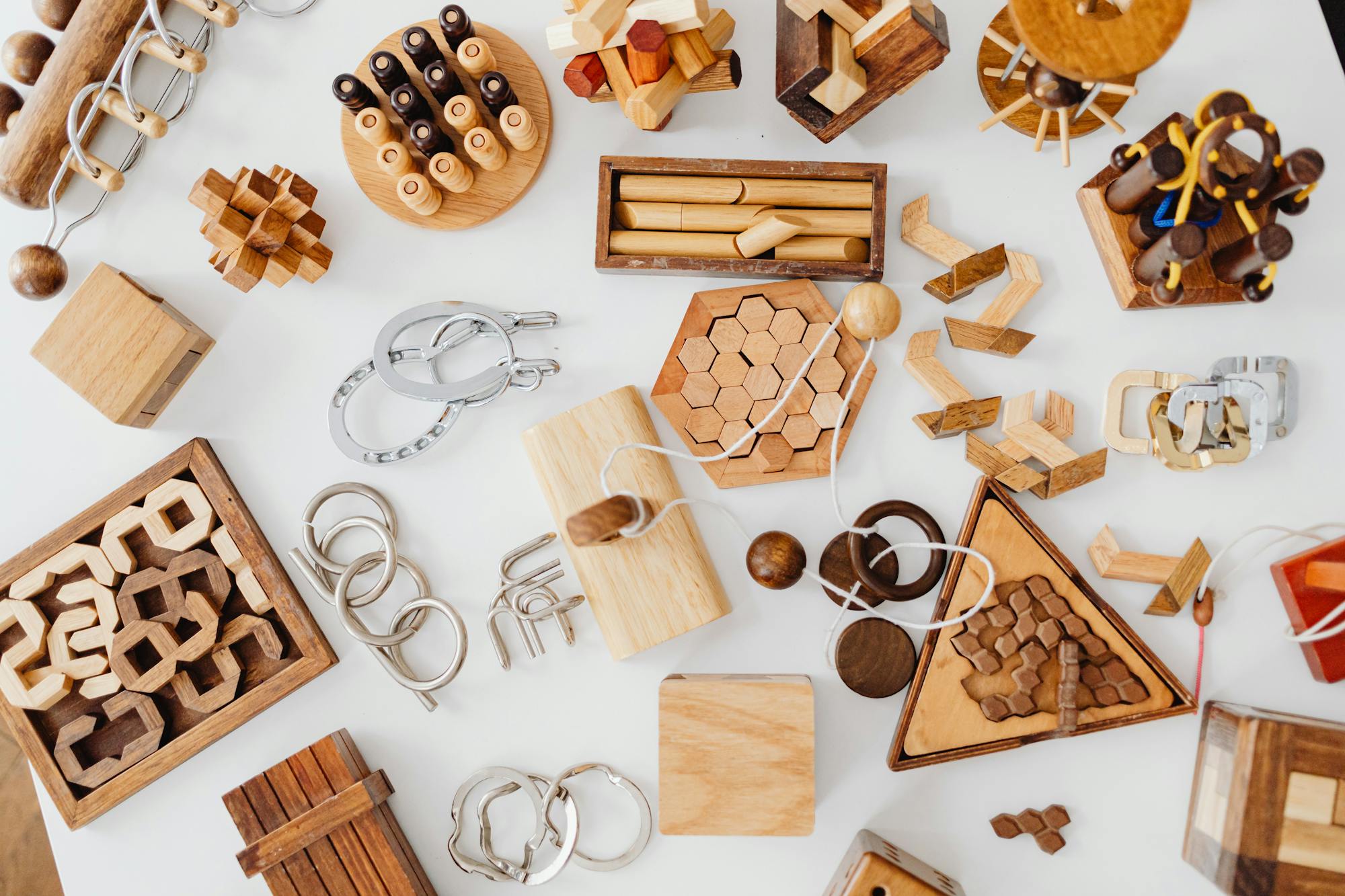
For adults who love science, the best 3D wooden puzzles for adults offer a particularly satisfying experience. Wood is a material that rewards patience and precision, and many science-themed wooden models are laser-cut with fine detail that reflects genuine structural accuracy. You are not just building a decoration: you are working through a scaled representation of something that exists or once existed in the real world.
There is also a meditative quality to the process. After a demanding day, the focused attention that puzzle assembly demands can serve as a mental reset. You follow logic, solve spatial problems, and finish with a result you can actually see and hold. For the scientifically minded, that combination of intellectual engagement and physical reward is hard to beat.
What to Look for When Buying a Science-Themed 3D Puzzle
Not every 3D puzzle is created equal, and a poor purchase can turn an enjoyable hobby into a frustrating one. Before you add anything to your basket, it is worth knowing which factors actually matter.
Material, Complexity, and Scale
Material is your first consideration. Wood and foam board are the two most common options. Wood produces more durable models with sharper detail, and it tends to age far better on a display shelf. Foam board versions are cheaper and often suited to quick builds, but they can feel flimsy once assembled. If longevity matters to you, wood is the better choice.
Complexity should match your experience and your goals. Piece counts can range from under 50 for beginner models to over 500 for ambitious projects. Science-themed puzzles often come with additional context, such as labelled diagrams or fact cards, which adds educational value. If you are new to 3D puzzles, start with a model in the 100 to 200 piece range so you can build confidence before you tackle something larger.
Scale is easy to overlook, but it matters. Some models are desk-sized and compact: others are large enough to become a room centrepiece. Check the finished dimensions before you buy. A model of the Earth’s layers or a full anatomical skull can be surprisingly large once assembled, so make sure you have somewhere suitable to put it.
Top 3D Puzzles for Adults Who Love Science
The market for science-themed 3D puzzles has grown considerably in recent years. You now have a solid range of options across different scientific disciplines, price points, and complexity levels. The sections below highlight some of the strongest categories to explore.
Astronomy and Space Models
Space is one of the most popular themes in science-focused 3D puzzles, and it is easy to understand why. The subject carries a sense of wonder that translates well into physical models. A well-crafted 3D model of the solar system, for instance, gives you a tangible sense of planetary scale that no poster or screen can fully replicate.
Look for models that include accurate orbital positioning and surface detail. Some of the best options come in tiered sets, where you build each planet separately and then arrange the full system. Others focus on individual objects, such as the Moon’s surface, with crater detail that reflects real topographical data. These models work well as desk or shelf displays and tend to spark conversation.
If you prefer something more structural, rocket and telescope models offer a different kind of challenge. They require precise assembly and often include movable parts, which adds an extra layer of satisfaction to the finished result.
Biology, Anatomy, and Natural World Puzzles
For those whose scientific interest leans toward life sciences, biology and anatomy puzzles offer a different kind of depth. A 3D model of the human skull, for example, is both a puzzle and a study aid. Many versions include removable sections so you can examine layers of structure once the build is complete.
Human anatomy models are particularly popular, and you can find detailed representations of the brain, heart, and skeletal system. These are not just novelties. For students, healthcare professionals, or simply anyone fascinated by the human body, they serve as hands-on reference tools that stay useful long after the initial build.
Beyond human anatomy, the natural world offers a rich set of subjects. DNA double helix models are a favourite among biology enthusiasts, and they tend to be relatively accessible in terms of complexity. Fossil replicas, insect anatomy models, and even plant cell structures have all made their way into the 3D puzzle format. Whatever corner of biology interests you most, there is likely a model that brings it to life in three dimensions.
Conclusion
Science-themed 3D puzzles sit at a rewarding intersection of learning and craft. Whether your interest lies in the stars above or the biology beneath your skin, there is a model out there that matches your curiosity. Take your time to consider material, complexity, and scale before you buy, and you are far more likely to end up with something you genuinely enjoy building and displaying. The best puzzle is the one you actually finish.